

There’s a reason velvet sofas keep showing up on every interior design feed right now. They catch light differently than any other fabric – pile facing one direction reads almost black, turned the other way it glows. In a world of flat, cautious interiors, that depth and presence feels essential.
But velvet’s real power in 2026 isn’t the texture – it’s the color. This year, sofa colors have moved firmly away from cool grays and safe beiges toward something richer, warmer, and far more interesting. Jewel tones are back in full force. Earthy moody shades are replacing the millennial pastels that now read as unmistakably 2016. And some unexpected colors – burnt orange, icy blue, mocha, are having their biggest moment yet.
This guide covers every velvet sofa color that’s trending in 2026, what each one says about the room it’s in, and exactly what to pair it with so the whole space works – walls, rugs, cushions, and metals included.
Table of Contents
- Why Velvet Is Still the Right Call in 2026
- Emerald Green — The Dominant Jewel Tone
- Sapphire and Deep Navy — Dramatic and Grounding
- Burnt Orange and Terracotta — The Warmth Trend
- Deep Plum and Amethyst — Moody Luxe
- Burgundy — The Classic Having Its Moment Again
- Moody Mocha and Espresso — The New Neutral
- Icy Blue — The Surprise Trend of 2026
- Sage and Olive Green — The Understated Option
- What Colors Are Going Out of Style
- How to Choose the Right Velvet Sofa Color for Your Room
- Final Thoughts
Why Velvet Is Still the Right Call in 2026
Before getting into color, it’s worth addressing the question everyone quietly wonders: is velvet furniture going out of style?
The answer, firmly, is no – but the way to use it has evolved. The velvet sofas of 2026 aren’t the dusty, Victorian-adjacent pieces of five years ago. The 2026 iteration comes in performance velvet (durable enough for everyday life, rated up to 100,000 rubs) and features softer, more organic silhouettes – curved arms, rounded backs, lower profiles.
Designer consensus is clear: velvet, bouclé, and other tactile fabrics are proving hugely popular because they combine comfort with a timeless, stylish finish. In a year where how your sofa feels is considered just as important as how it looks, velvet delivers on both counts.
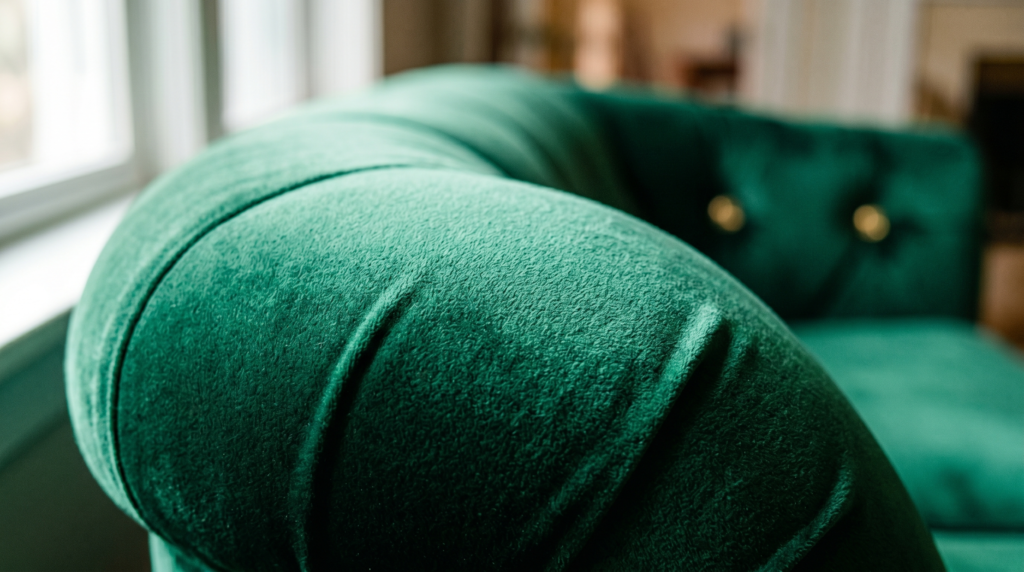
There’s also a newer twist gaining ground in 2026: patterned velvet. Designer Kim Armstrong explains why it works so well: the pattern feels layered into the fabric in a way that’s different to how the same design reads on linen or cotton – the result is plush and light-catching, instantly grounding the space. Animal silhouettes and botanical designs stitched into velvet are being flagged by Elle Decor as one of the biggest upholstery trends to watch.
But for most living rooms, solid-color velvet is the stronger investment – and the colors below are the ones worth knowing about right now.
Emerald Green — The Dominant Jewel Tone
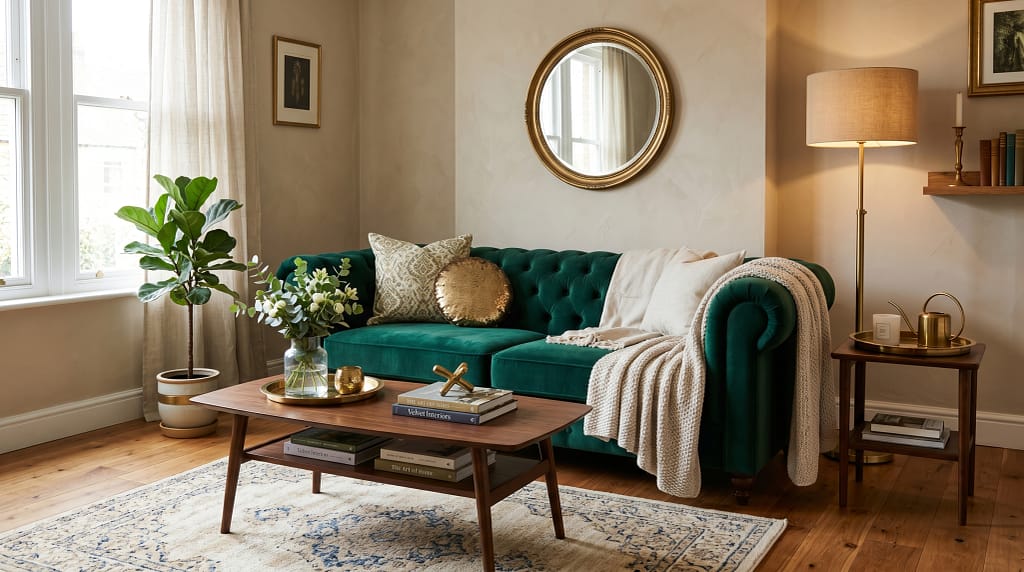
If there’s one velvet sofa color that defined 2026 before the year was even halfway through, it’s emerald green. Celebrities from Sabrina Carpenter to J.Lo have been photographed lounging on green velvet sofas, and design experts are consistent in explaining why: blue and green hues are seeing increased demand thanks to the grounding effect they have on a space – part of the wider biophilic trend running through 2026 interiors.
An emerald green velvet sofa works because the depth of green in velvet gives it a jewel-like quality that flat fabrics simply cannot match. It shifts from forest-dark in low light to rich and glowing under direct light – the same sofa can feel cozy and intimate at night and bright and editorial during the day.
What to pair with an emerald green velvet sofa:
- Walls: Neutral cream or warm white to let the sofa be the star. For a more dramatic look, a rich aegean blue or plum creates stunning contrast with the cool blue undertones of emerald
- Metals: Brass is the natural partner – emerald and brass amplify each other’s richness without clashing. Avoid silver or chrome, which fights the warmth
- Cushions: Mustard yellow for a mid-century modern edge, blush pink for a softer 70s vibe, or tonal green layering for a sophisticated monochrome approach
- Rug: Warm-toned Persian or jute – keep the floor grounded and textured
- Coffee table: Dark wood (teak or walnut) or a round marble piece in white or warm grey
Styling tip: Pair an emerald sofa with mirrored furniture and gold metallic accessories for a grown-up entertaining space that reads old Hollywood without trying too hard.
Sapphire and Deep Navy — Dramatic and Grounding
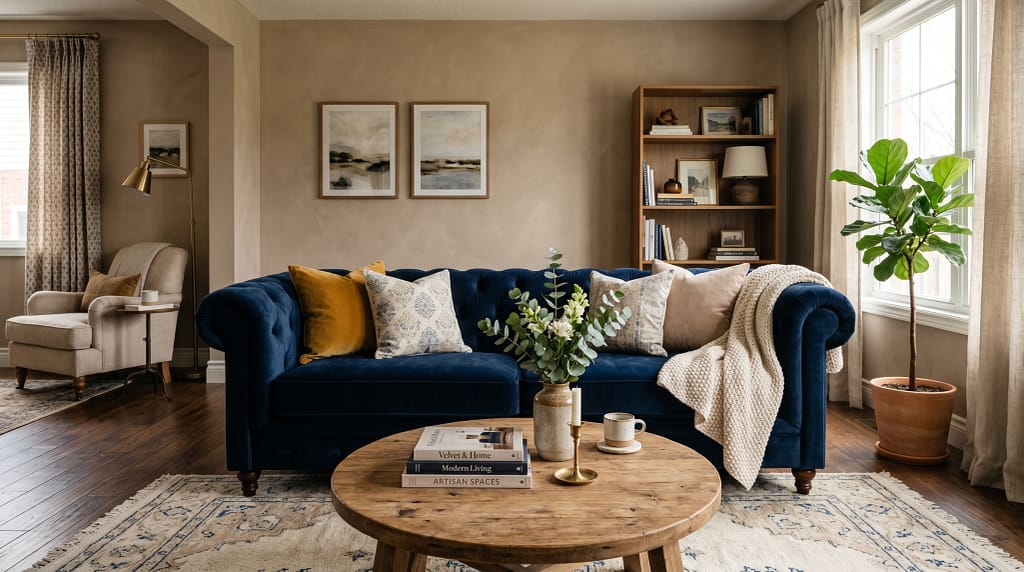
Sapphire velvet has a quality that makes it uniquely alive: it can read almost black in shadow, then glow like cobalt in direct sunlight. This shifting quality makes it feel dynamic in a way matte textiles never can – it insists on notice and refuses to blend into the background.
Deep navy and sapphire are the jewel tones for people who want a statement but find emerald too nature-forward. They work particularly well in rooms with warm neutrals and walnut wood accents – the contrast between the cool blue and the warm wood creates a sophisticated tension.
What to pair with a sapphire or navy velvet sofa:
- Walls: Warm white, soft greige, or a warm sand tone. Avoid cool greys – they flatten the sofa’s richness
- Metals: Walnut and brass again. Sapphire and walnut is a classic pairing that amplifies the richness of both
- Cushions: Cream or ivory for contrast, caramel or rust for warmth, or deep teal for a tonal blend
- Rug: Cream, oatmeal, or a warm natural fiber like sisal or jute
- Art: Abstract art with warm earth tones above the sofa – avoid busy, clashing prints
Room type: Sapphire velvet works especially well in north-facing rooms where the cooler light enhances the blue tones rather than making them look muddy.
Burnt Orange and Terracotta — The Warmth Trend
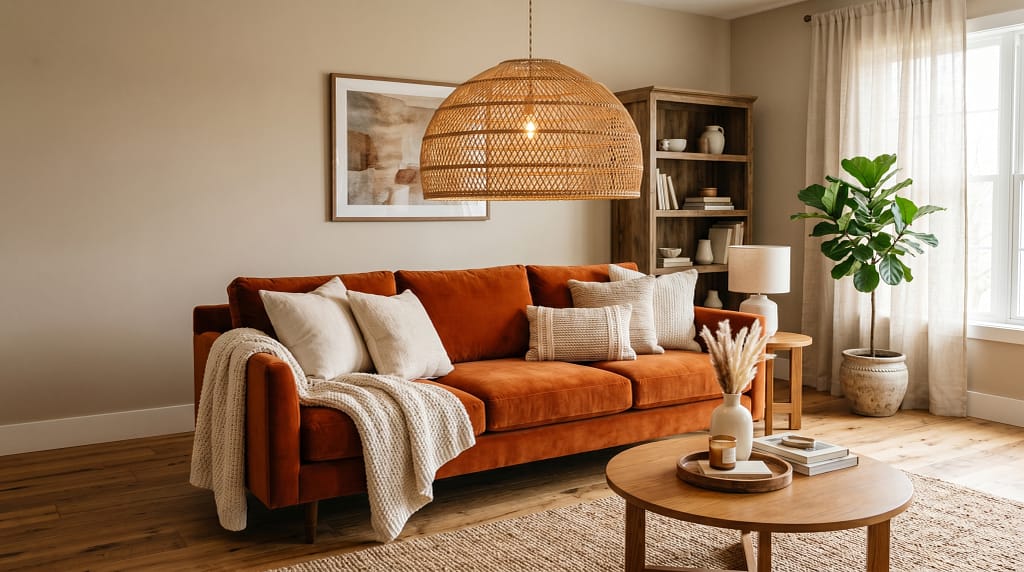
In 2026, burnt orange and terracotta are finally having the mainstream moment they’ve been building toward for two years. Previously considered an accent color, burnt orange in a darker, deeper version has become approachable enough for a full sofa, particularly in velvet, where the cozier texture softens the boldness of the hue.
The key to making burnt orange work is texture. Sleek finishes like leather or linen can make orange feel harsh. Velvet absorbs light and adds warmth, which is exactly what a burnt orange sofa needs to feel deliberate and grounded rather than loud.
What to pair with a burnt orange or terracotta velvet sofa:
- Walls: Warm cream, muted white, or a warm sand. The sofa is doing the color work – let the walls breathe
- Metals: Copper is the natural companion (oxidized copper literally turns green over time, making it a natural pair with orange-adjacent tones). Brass works equally well
- Cushions: Warm browns, cream, and dusty blush. Add a single mustard or rust cushion for tonal depth
- Rug: Cream or oatmeal base with warm-toned patterns – a Moroccan-style rug or natural jute adds to the earthy, hygge feel
- Accent chairs: Warm brown leather or cream bouclé to soften the palette without fighting the sofa
Avoid: Cool greys, stark white, or chrome metals – any cool tone will make the warm burnt orange look out of place.
Deep Plum and Amethyst — Moody Luxe
Plum and amethyst velvet sofas occupy a fascinating middle ground between jewel tone and neutral – rich enough to make a statement, dark enough to feel grounded. A velvet armchair in amethyst pops against pale plaster walls or light stone floors in a way that a grey sofa never could, without the commitment of a full jewel tone like emerald.
In 2026, plum is trending alongside burgundy as part of the broader “moody luxe” movement in interiors – a reaction against the pale, cautious palettes of the late 2010s. If your living room has felt like it’s missing something, a deep plum velvet sofa is often exactly what it needs.
What to pair with a deep plum or amethyst velvet sofa:
- Walls: Pale plaster, warm ivory, or a very soft grey-lilac. Darker walls risk the sofa disappearing into the background
- Metals: Gold and warm brass. Avoid cold chrome – it strips the warmth from plum entirely
- Cushions: Dusty pink, cream, and sage green for a layered, sophisticated palette. Deep velvet cushions in a slightly lighter lilac add tonal depth
- Rug: A large, soft cream or light grey rug to lift the floor and stop the room feeling heavy
- Lighting: Warm-toned lamps are critical – cool overhead lighting kills the richness of deep plum
Styling note: A single amethyst velvet sofa works well as a room anchor without needing much else – a few well-chosen accessories and the sofa carries the entire design.
Burgundy — The Classic Having Its Moment Again
Burgundy velvet is described by fabric experts as a classic for a reason: it feels warm, luxurious, and a little dramatic, pairing beautifully with metallics, creams, and darker woods. It’s never truly gone out of style – but in 2026 it’s being recontextualized in more contemporary settings rather than purely traditional ones.
The reason burgundy works in modern interiors is its versatility in different light conditions: it doesn’t disappear into the shadows the way darker blacks or deep browns can. In low-light rooms, burgundy velvet glows.
What to pair with a burgundy velvet sofa:
- Walls: Off-white, warm cream, or a rich caramel. Burgundy on a white wall creates a clean, contemporary contrast
- Metals: Aged brass, antique gold, or burnished copper – all of which complement burgundy’s warm red undertones
- Cushions: Cream, caramel, sage green, or a blush pink. Avoid bright red or orange – too close to the base hue and the combination reads as chaotic
- Wood tones: Dark walnut or rich mahogany amplify the drama. For a lighter feel, pale oak creates an unexpected and very stylish contrast
- Art: Gold or brass-framed art above the sofa – pairs naturally with the velvet’s warmth and the metallic accents throughout
For more on building a full living room palette around a statement sofa, our guide to how to style a curved sofa covers layout and accessory combinations that work at every room size.
Moody Mocha and Espresso — The New Neutral
Not every 2026 velvet sofa trend is about bold jewel tones. Moody mocha – a deep chocolate brown – is the sophisticated, cocooning choice for people who want richness without full saturation. Interior brands are describing it as bringing a sophisticated, cocooning feel to interiors, with versatility that lets it work across both classic and contemporary settings.
Espresso and dark mocha in velvet are particularly interesting because they read as a neutral in the context of warm-toned rooms, while still having far more personality than a grey or beige sofa.
What to pair with a moody mocha or espresso velvet sofa:
- Walls: Warm cream, terracotta, or a warm sage green. Mocha and warm sage is one of the most sophisticated combinations in 2026 interiors
- Metals: Brass and antique gold. Copper also works beautifully
- Cushions: Cream, oatmeal, burnt sienna, and olive green for a rich, earthy palette
- Rug: A large cream or oatmeal rug grounds the space. A patterned rug with warm earth tones adds texture without fighting the sofa
- Plants: Mocha velvet pairs beautifully with indoor greenery – the contrast between the dark sofa and lush green plants is one of the most naturally appealing combinations in a living room
Icy Blue — The Surprise Trend of 2026
Icy blue is the velvet sofa color most people wouldn’t have predicted making a list in 2026 – but the data is clear. It’s trending on Pinterest and being picked up by interior designers as a sophisticated, feminine-adjacent choice that works particularly well in brightly lit rooms where the cooler tones shine rather than flatten.
The key to icy blue velvet is the pairing: stark whites can keep the coolness going, but warmer creams and chunky knit textures will soften the blue and stop it feeling clinical.
What to pair with an icy blue velvet sofa:
- Walls: Warm white or very pale cream – cool walls will make the room feel cold rather than crisp
- Metals: Matte gold or warm brass to introduce warmth and stop the palette reading as cold
- Cushions: Warm cream, ivory, and a single soft blush pink cushion to soften the coolness
- Rug: A cream or natural fiber rug – the warmer the better
- Curtains: Sheer curtains help manage natural light, which directly affects how icy blue reads throughout the day
Icy blue velvet fits well with traditional design and can be used to balance warm finishes across the room – it’s a strong choice for rooms that already have a lot of wood tone and need something to cool the palette down.
Sage and Olive Green — The Understated Option
For those who love the green velvet direction but find emerald too bold, sage and olive are the understated alternatives. Sage feels contemporary and calm; olive leans earthier and more complex. Both work in a wider range of room sizes and lighting conditions than their deeper counterparts.
Yellow-based greens (olive) feel warm, while blue-based greens (emerald) feel cooler and more dramatic. Sage sits somewhere between the two – which is partly why it’s so easy to live with long-term.
What to pair with sage or olive velvet:
- Sage: Cream, pale grey-blue, warm white. Sage pairs well with rattan and natural fibers for a relaxed, Scandinavian-adjacent feel
- Olive: Rust, cream, tan leather, and warm wood tones. Olive and warm neutrals create one of the richest earthy palettes available right now
- Both: Avoid cool blues and pure whites – warm everything up. Brass metals, warm wood, natural textiles.
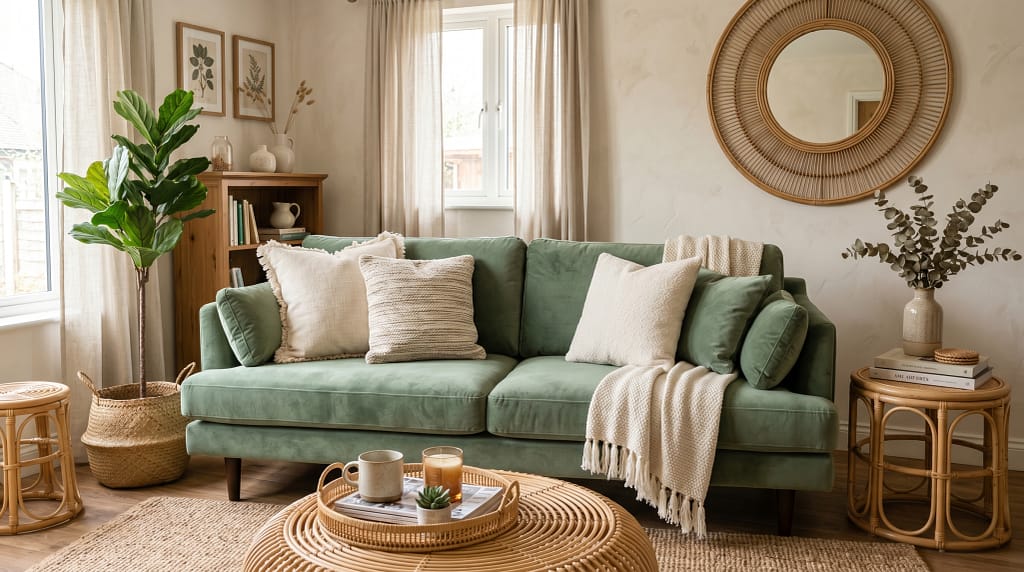
For smaller spaces where a full velvet sofa might feel heavy, see our guide to the best sofas for small living rooms – a sage velvet loveseat is one of the best choices for a smaller room that still wants a color statement.
What Colors Are Going Out of Style
Just as important as what’s trending is what’s not. In 2026, interior designers are consistently flagging a few sofa colors as increasingly dated:
Rose quartz and millennial pink – These pastel sofa colors now read firmly as 2016. Not terrible, just awkward to style alongside everything else happening in interiors right now.
Cool grey – The trend is moving firmly away from cool, light grey tones toward warmer, darker shades. If your grey sofa feels like it’s not working with your room anymore, this is probably why – it’s the palette around it that’s shifted.
Stark beige – Plain, flat beige is being replaced by more complex warm neutrals. Mocha, camel, warm taupe, and espresso are the evolved versions of beige that feel current.
How to Choose the Right Velvet Sofa Color for Your Room
With this many options, the decision can feel overwhelming. Here’s a simple framework:
Step 1 – Assess your light. North-facing rooms with cooler, flatter light suit warmer velvet colors: burnt orange, burgundy, emerald, mocha. South-facing rooms with warm, bright light can handle cooler, richer colors: sapphire, icy blue, deep plum.
Step 2 – Consider your existing metals. If your room has brass or gold accents, almost every jewel tone works. If you have chrome or silver, lean toward cooler tones like sapphire or icy blue.
Step 3 – Order a large swatch and live with it. Look at it in the morning, the afternoon, and at night under different lighting. That’s the only way to know if a velvet color will work long-term – velvet changes dramatically under different light conditions. Darker colors absorb more light and feel deeper and more saturated. Lighter colors reflect more and give a brighter, airier quality.
Step 4 – Think proportion. A small emerald velvet armchair energizes a corner; a full-length sapphire sofa dominates a living area. Scale matters – the right color in the wrong proportion can overwhelm rather than anchor.
For more on sizing and layout, our sofa size guide covers exactly how to choose proportions before committing to color.
Final Thoughts
Velvet in jewel tones anchors interiors in 2026, giving weight, personality, and texture. In a world of pale, cautious interiors, that presence feels essential. The pile catches light differently depending on angle, ambient illumination, and touch – which means a well-chosen velvet sofa is never static. It responds to movement, to light, to the seasons.
The best velvet sofa color for your room is the one that responds to your specific light, your existing palette, and how you actually want the room to feel – not just the one that’s trending on a feed. Use the pairings in this guide as a starting framework, then trust your specific conditions.
Whichever color you choose, the key principle is the same: because the sofa itself is already a strong shape and a rich material, the most sophisticated approach is to layer complementary textures and tones around it rather than competing colors. Let the velvet do the work.
Loved this guide? Pin it to your living room board and save it for when you’re ready to shop.
Related posts you might like:
- How to Style a Curved Sofa — 7 Living Room Layouts That Actually Work
- Best Sofa for Small Living Rooms — The 2026 Guide
- 3 Best Modular Sofas for Small Living Rooms
- Sofa Size Guide for Small Living Rooms



[…] a deeper dive into how color choices on a sofa affect the rest of the room, our guide to trending sofa colors is a useful companion if you’re considering swapping the sofa itself down the […]
[…] Velvet Sofa Colors That Are Trending in 2026 […]
[…] a warm-toned velvet or a structured linen works beautifully as the base fabric. See our guide to velvet sofa colors in 2026 for shade guidance that pairs well with Afrohemian’s earthy palette – deep terracotta, […]
[…] For velvet sofa choices that pair well with this look, see our velvet sofa colours guide […]
[…] than almost any other single material choice. For guidance on choosing the right velvet shade, our velvet sofa colors guide covers the 2026 palette in detail – emerald, sapphire, and deep plum are all strong Neo Deco […]
[…] material language consistent. For more on sofa colour choices that work with this palette, see our velvet sofa colours guide – burnt orange and deep plum velvet both work powerfully against terracotta […]
[…] For a full guide to each colour with specific wall, metal, cushion and rug pairing rules, see our complete velvet sofa colours guide. […]