

After a long winter – or even just a few weeks of rain, pollen, and wind – outdoor furniture collects more grime than most people expect. The good news is that most pieces can be completely refreshed using supplies you already have at home. The mistake most people make is using the wrong method for the wrong material – which either damages the finish, strips protective oils, or leaves the furniture looking worse than before.
Knowing how to clean outdoor furniture properly is not complicated. But it is material-specific. What works brilliantly on plastic resin will damage natural teak. What removes rust from metal will bleach fabric cushions. This guide covers every major outdoor furniture material with a specific step-by-step process for each – so you clean it right the first time and make it last significantly longer.
Table of Contents
What You Need Before You Start
Before cleaning any outdoor furniture, identifying the material is the single most important step. Different materials require different care methods – and using the wrong product on the wrong surface causes damage that the right cleaning method would have completely avoided.
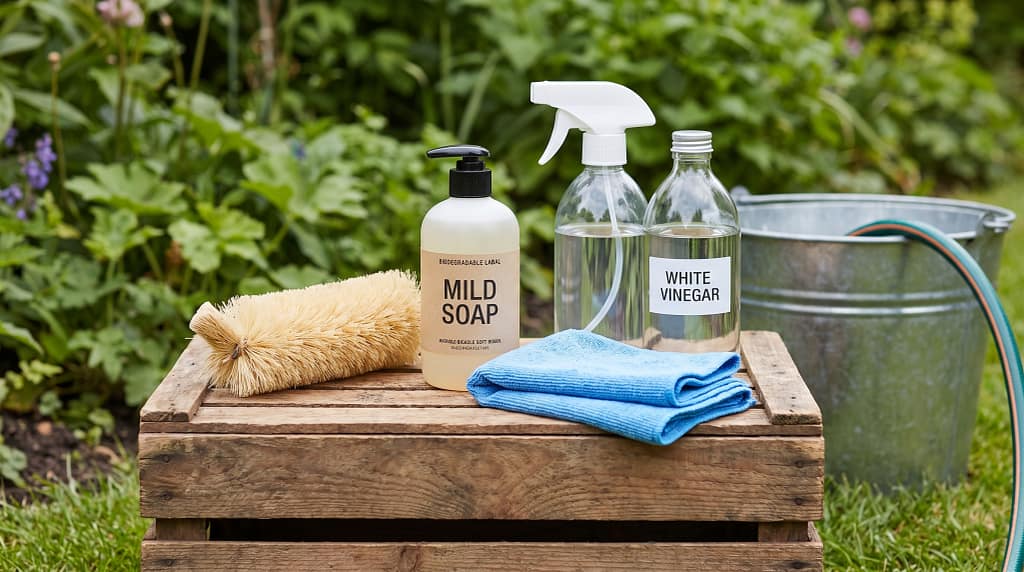
The universal supply list
Most outdoor furniture cleaning jobs require only a few basic supplies:
- Mild dish soap or a dedicated outdoor furniture cleaner
- Warm water
- A soft-bristled brush (not wire or abrasive)
- A soft microfiber cloth or sponge
- A garden hose
- White vinegar (for mold, mildew and light rust)
- A dry towel for immediate drying
One rule before you begin
One of the most overlooked outdoor furniture cleaning tips is removing dry debris before washing. Skipping this step can cause dirt particles to scratch surfaces when scrubbing begins. Before applying any water or cleaning solution, brush or wipe loose dirt, leaves, and pollen off every surface first. This single step prevents the most common cause of surface scratching during cleaning.
How to Clean Wood Outdoor Furniture

Wood outdoor furniture is one of the most rewarding materials to clean because the results are immediate and dramatic – but it also requires the most careful approach. Solid wood furniture often develops a natural weathered appearance over time. But harsh cleaners can strip protective oils and damage the surface.
Step-by-step: Cleaning wood outdoor furniture
Step 1 – Dry brush first. Use a soft brush to remove loose dirt, debris and bird droppings before introducing any moisture. Work with the grain of the wood rather than against it.
Step 2 – Mix your cleaning solution. Begin by mixing mild soap with water. A few drops of mild dish soap in a bucket of warm water is all you need. Avoid anything with bleach, ammonia, or harsh solvents – all of these strip the wood’s natural protective oils.
Step 3 – Scrub with the grain. Use a soft brush and scrub lightly in the direction of the grain. Work section by section rather than scrubbing the whole piece at once, which allows the soap to dry before you rinse.
Step 4 – Rinse thoroughly. Rinse with clean water and then let it dry fully. Do not let soapy water sit on wood surfaces for extended periods.
Step 5 – Allow complete drying. Wood needs to dry completely before any protective treatment is applied. In direct sunlight this typically takes two to four hours. In shade or humid conditions, allow significantly longer.
Step 6 – Apply a protective finish. Once dry, apply a wood-specific outdoor furniture oil or sealant to restore the protective layer that cleaning removes. This step is what determines how long the furniture stays clean between washes.
How to Clean Teak Outdoor Furniture
Teak is the most popular premium outdoor furniture wood and it deserves specific guidance because it behaves differently from other hardwoods. A soft brush and a mixture of mild soap and water can effectively remove dirt and surface stains. For more thorough cleaning, especially if the wood has started to weather, using a teak-specific cleaner is recommended.
The teak-specific step-by-step
Step 1: Remove loose debris with a dry brush, working with the wood grain.
Step 2: Mix a teak-specific cleaner with water according to the product instructions. Alternatively, mild dish soap and warm water works well for routine cleaning.
Step 3: Apply the solution with a soft brush and scrub gently with the grain. Avoid cross-grain scrubbing which raises the wood fibers and creates a rough surface.
Step 4: Rinse completely with clean water and allow to dry fully in a well-ventilated spot.
Step 5: Once dry, apply teak oil or teak sealer if you want to maintain the warm honey color. If you prefer the natural silver-grey weathered patina that teak develops over time, no oil treatment is necessary – simply cleaning and drying is sufficient.
What to avoid with teak: Do not use teak oil and other products that can stain the wood unevenly. Never use a pressure washer directly on teak – the high pressure opens the wood grain and accelerates weathering significantly.
How to Clean Metal Outdoor Furniture
Metal outdoor furniture – including cast aluminium, powder-coated steel, and wrought iron – is among the most durable options available, but each type has specific cleaning requirements.
Cast aluminium
Cast aluminium furniture frames work best with mild soap and warm water. Do not use abrasive materials, cleansers or bleach products. Apply mixture to frame with a wash cloth or sponge – avoid using bristles that can scratch the frame. Rinse with clean water and dry thoroughly.
Powder-coated metal
Powder-coated steel and iron furniture has a baked-on finish that protects the metal underneath. Clean with mild dish soap and warm water using a soft cloth. The key step with powder-coated furniture is drying immediately and thoroughly after rinsing – standing water is what eventually gets under the coating and causes rust at the edges.
Step-by-step: Cleaning metal outdoor furniture
Step 1: Rinse with a garden hose to remove surface dust and loose debris.
Step 2: Wash with dish soap and warm water or a metal-specific patio furniture cleaner.
Step 3: Use a soft cloth or sponge – never steel wool or abrasive pads on powder-coated or painted metal, which scratches the finish and accelerates corrosion.
Step 4: Rinse thoroughly to remove all soap residue.
Step 5: Apply car wax or silicone spray to protect the metal surface after drying. This is particularly important for furniture near coastal areas where salt air accelerates metal degradation.
Special note for coastal locations: Furniture located around salt water, including salt water pools, needs additional cleaning to remove materials that are inherently destructive to outdoor finishes. Cleaning on a weekly basis and applying a spray automotive wax four times a year is the recommended maintenance standard.
How to Clean Wicker and Rattan Outdoor Furniture
Wicker and rattan require a gentler approach than any other outdoor furniture material. Natural wickers are more delicate and require extra care around moisture, while synthetic wickers are generally easier to maintain.
Natural wicker
Natural wicker is genuinely fragile when wet – prolonged soaking can loosen the weave, cause warping, and promote mold growth within the fibers. The cleaning process needs to be quick and dry as possible.
Step-by-step for natural wicker:
Step 1: Use a dry brush or vacuum with a brush attachment to remove dust and debris from the weave first.
Step 2: Mix a small amount of mild dish soap with warm water.
Step 3: Take a soft sponge in the cleaning mixture to clean your wicker furniture using the non-abrasive side. Dab the furniture dry using a soft cloth.
Step 4: Do not rinse with a hose – instead wipe with a clean damp cloth to remove soap residue.
Step 5: Dry immediately and completely in the sun. Never leave natural wicker damp for extended periods.
Synthetic wicker (resin wicker)
Synthetic wicker is significantly more forgiving. It can be rinsed with a hose, cleaned with a soft brush and soapy water, and dried in the sun without the risk of warping or weave loosening that natural wicker carries. For most synthetic wicker furniture, the standard mild soap and warm water process covered in the introduction is entirely sufficient.
How to Clean Plastic and Resin Outdoor Furniture
Plastic and resin furniture is the easiest outdoor furniture material to clean. Plastic furniture, or resin, is made from all-weather materials like polyvinyl chloride (PVC) and polyethylene (PE). This easy-to-clean material doesn’t take much, so a few sprays of a cleaning solution and wiping with a microfiber cloth should do the trick.
Step-by-step: Cleaning plastic and resin outdoor furniture
Step 1: Rinse with a garden hose to remove loose dirt.
Step 2: Apply a mild dish soap and warm water solution with a soft cloth or sponge. For stubborn stains, a dedicated plastic/resin cleaner works faster.
Step 3: Scrub gently – plastic scratches more easily than people expect, and those scratches collect dirt permanently.
Step 4: Rinse completely and allow to air dry.
For white resin furniture specifically: White plastic tends to yellow over time from UV exposure. A solution of one part white vinegar to two parts warm water, applied with a soft cloth and rinsed off, removes most discoloration. For persistent yellowing, a small amount of oxygen bleach diluted in water is safe on resin but should be rinsed off completely and not left to sit.
How to Clean Outdoor Cushions and Fabric
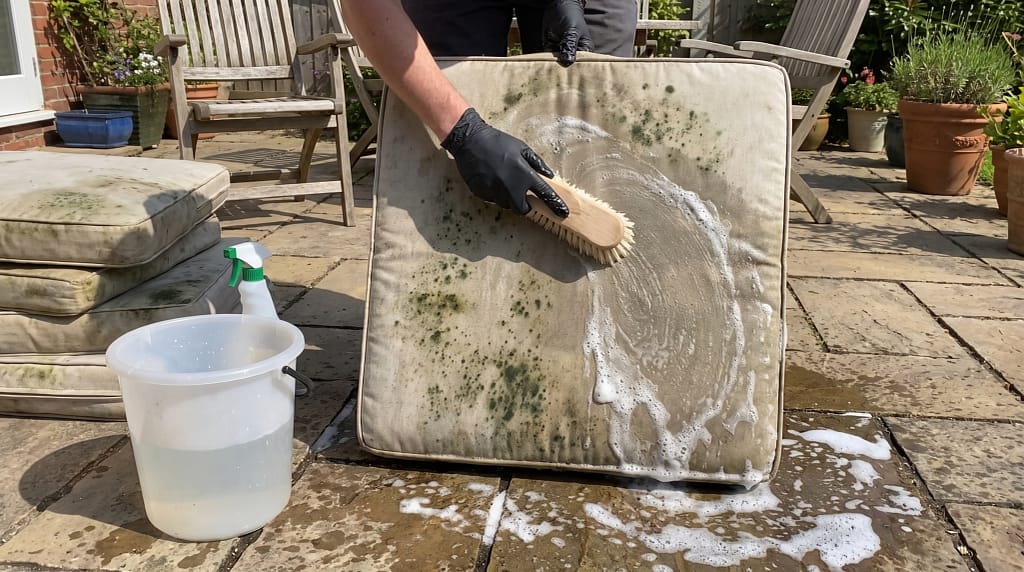
Outdoor cushions collect moisture, mold, mildew, pollen, and sunscreen – making them the highest-maintenance element of most outdoor furniture setups. The cleaning process depends on whether the covers are removable.
Cushions with removable covers
If your cushion covers have zips or ties, remove them and check the care label. Most synthetic outdoor fabric covers (including Sunbrella and similar performance fabrics) are machine washable on a gentle cycle at 30 degrees. Use a mild detergent and do not tumble dry – air drying in the sun is essential.
Cushions without removable covers
Step 1: Brush off any dry debris and loose surface dirt.
Step 2: Mix warm water with mild soap or use an outdoor fabric cleaner. Scrub gently with a soft brush or sponge.
Step 3: Rinse thoroughly with a hose.
Step 4: Air dry in the sun to prevent mold. Stand the cushions on their edge rather than laying flat – this allows air circulation on both sides and significantly reduces drying time.
Step 5: Apply a fabric protectant spray once fully dry. This repels water and UV-resistant protection and is the single most effective step in extending the time between deep cleans.
Pro tip: Add a few drops of tea tree oil to your vinegar mix to boost mildew resistance and leave a fresh scent.
How to Remove Mold and Mildew From Outdoor Furniture
Mold and mildew are the most common outdoor furniture problem, especially in climates with rain, humidity, or poor air circulation. The good news is that most mold on outdoor furniture is surface-level and responds well to a vinegar-based treatment.
The vinegar method – safe for most materials
Mix 1 cup of white vinegar with a gallon of water and scrub affected areas with a soft brush before rinsing. White vinegar is effective on mold and mildew, safe for most outdoor furniture materials, and does not leave chemical residue that harms plants when the rinse water drains into garden soil.
Apply the solution, leave it for 10 to 15 minutes to work into the mold, then scrub with a soft brush and rinse completely.
For severe mold on fabric and cushions
For spot cleaning, mix detergent with warm water and scrub stained areas. Rinse with a hose and air dry completely before replacing.
For mold that has penetrated deeply into cushion fabric, a diluted oxygen bleach solution (not chlorine bleach) is the strongest safe option. Mix according to the product instructions, apply to the affected area, leave for 20 minutes, scrub and rinse thoroughly.
What to avoid with mold treatment
Never use chlorine bleach on colored fabric, natural wood, or wicker – it strips color and weakens fibers. Never use a pressure washer to remove mold – the pressure embeds mold spores deeper into porous materials rather than removing them.
How to Remove Rust From Metal Outdoor Furniture
Surface rust on metal outdoor furniture looks alarming but is usually fixable with household supplies. The key is catching it early – deep rust that has penetrated through a powder coat or paint layer is much harder to reverse.
For surface rust
For rust, scrub gently with white vinegar or fine steel wool. Avoid harsh scrubbing on painted surfaces.
Apply undiluted white vinegar directly to the rust spot with a cloth, leave for 30 minutes, then scrub with a soft brush or the fine steel wool (on bare metal only – not on powder-coated or painted surfaces). Rinse completely and dry immediately.
For rust on powder-coated furniture
On powder-coated metal, use white vinegar on a cloth rather than steel wool – the abrasive will damage the coating. If the rust has penetrated through the coating, sand the area lightly, treat with a rust converter product, and apply a touch-up paint in a matching colour.
Prevention
After cleaning and drying metal furniture completely, apply car wax or silicone spray to protect the surface and create a barrier against moisture. This step takes five minutes and prevents the rust cycle from restarting within weeks.
How to Clean Outdoor Furniture Covers
Outdoor furniture covers extend furniture life significantly by protecting against UV, rain, and debris – but they also collect mold and mildew themselves and need regular cleaning.
Most outdoor furniture covers are made from polyester or polypropylene. Clean with mild soap and warm water, scrub with a soft brush, rinse thoroughly, and air dry completely before replacing on the furniture. Never store covers damp – this creates exactly the mold conditions they are meant to prevent.
For mold on covers, the same white vinegar solution used on furniture fabric works well. Apply, leave for 15 minutes, scrub and rinse.
Maintenance Schedule – How Often to Clean Each Material
Different materials need different cleaning frequencies to stay in good condition:
Weekly (during heavy use season):
- Wipe down all surfaces with a damp cloth to remove pollen, dust and surface dirt
- Check for and remove any bird droppings immediately – these are acidic and damage finishes quickly
Monthly:
- Full clean of all furniture using the material-specific methods above
- Check metal furniture for any rust spots forming at joints or scratches
- Check fabric cushions for mold spots developing in less visible areas
Seasonally (start and end of outdoor season):
- Deep clean all furniture before first use of the season
- Apply protective treatments – wood oil, metal wax, fabric protectant – at the start of season
- Deep clean before storing at end of season – never store dirty furniture as grime and moisture accelerate deterioration in storage
Lightly clean once a week during heavy use and deep-clean once a month. Cover or store furniture when not in use for longer-lasting results.
What NOT to Do When Cleaning Outdoor Furniture
A few specific errors cause the most damage – and most of them come from using too much force or the wrong product.
Do not use a pressure washer on most materials. Do not pressure wash your outdoor furniture on your own. This can damage your furniture and possibly lead to injury. Either hand clean your outdoor furniture or hire a professional service for pressure washing. The only exception is heavy poly or resin furniture where the product specification explicitly states pressure washing is safe – and even then, maintain at least 8 to 12 inches of distance.
Do not use abrasive scrubbing pads. Steel wool, abrasive sponges, and wire brushes all scratch surfaces – even materials that look hard enough to take it. Always use soft brushes and non-abrasive cloths.
Do not use chlorine bleach on colored fabrics or wood. Chlorine bleach strips color from fabric and destroys the natural oils in wood. Use oxygen bleach instead for tough stain removal.
Do not leave soapy water to dry on any surface. Always rinse thoroughly after cleaning. Dried soap residue is sticky, attracts more dirt, and on some surfaces can cause discoloration.
Do not store furniture damp. This is the single fastest way to cause mold, mildew, and wood damage in storage. Always ensure furniture is completely dry before covering or moving to a shed or garage.
Final Thoughts
Knowing how to clean outdoor furniture properly comes down to one principle: match the method to the material. The key is knowing about the right process and avoiding cleaning methods that may damage finishes, fabrics, or natural materials.
Most outdoor furniture can be completely refreshed with mild dish soap, warm water, a soft brush, and white vinegar – supplies that cost nothing and work across almost every material. The protective step after cleaning – wood oil, metal wax, fabric protectant – is what determines how long the furniture stays clean between sessions and how many seasons it lasts before needing replacement.
Clean at the start of the outdoor season, maintain weekly during peak use, and clean again before storing at the end of the season. That routine alone extends outdoor furniture life by years.
Loved this guide? Pin it to your outdoor living board and save it for the next time your patio furniture needs a refresh.
Related posts you might like: