

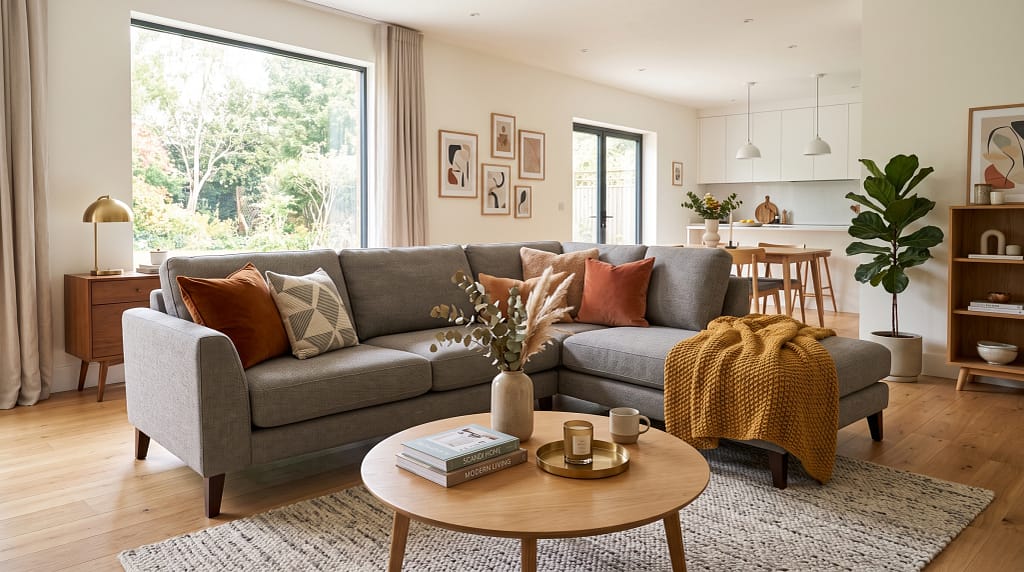
Sectionals are now the single largest furniture category in the global sofa market – accounting for 27.3% of category value in 2025 and projected to grow significantly through 2034. The reason is straightforward: sectionals do what standard sofas cannot. They define a seating zone in an open-plan space, seat significantly more people comfortably, and give a living room an immediate sense of scale and completeness that a two or three seater cannot replicate.
The problem is that finding the best sectional sofa for your specific room requires understanding a genuinely wide set of variables – configuration, size, frame construction, fabric grade, and how to measure your space before committing. Get these right and a sectional is the living room’s anchor for a decade. Get them wrong and you end up with a sofa that blocks every walkway, overwhelms the room, or fails structurally within a few years.
This guide covers every type of sectional sofa, the specific construction features worth paying for, the sizing rules that prevent the most common mistakes, and the best sectional sofas available in 2026 – with real product images, verified specs, and direct links from our affiliate brands.
Table of Contents
What Is a Sectional Sofa and Who Actually Needs One
A sectional sofa is a seating arrangement made from two or more individual pieces that connect to form a larger configuration – typically an L-shape, U-shape, or curved arrangement. Unlike a standard sofa, it can be reconfigured, expanded, or separated into individual pieces depending on the space.
The sectional sofa is the best choice when any of the following apply:
- The living room is open-plan and needs a piece of furniture to define the seating zone without physical walls
- The household regularly seats more than four people and a standard three-seater leaves people without comfortable seating
- The primary use of the living room is relaxation and lounging rather than formal entertaining – sectionals with deep seats and chaise extensions are purpose-built for this
- The room has a corner that a standard sofa wastes – an L-shaped sectional fills that corner and turns dead space into seating
The sectional sofa is not the right choice when the room is under 12 feet wide, when the layout requires passing through the sofa zone regularly, or when the household moves frequently and transport is a priority.
Types of Sectional Sofa – L-Shape, U-Shape, Modular and More
Understanding which configuration suits your space is the single most important decision in the sectional sofa buying process.
L-Shaped Sectional
The most popular configuration. One long seat runs horizontally and a shorter chaise or seat section extends at a 90-degree angle. L-shaped sectionals are the most versatile – they work in rooms from 12 feet wide upward, they fit naturally into corners, and the chaise provides a dedicated lounging position without taking up as much floor space as a full U-shape.
L-shaped sectionals remain the most popular because they maximize seating while fitting comfortably into most living rooms. They work in rooms under 15 feet wide where a U-shape would overwhelm the space.
U-Shaped Sectional
Three sides of seating that create an enclosed, social arrangement. U-shaped sectionals need significantly more floor space – typically a room of at least 16 by 16 feet for the furniture to breathe properly. In the right room, a U-shaped sectional is the most social and most welcoming seating arrangement available – everyone faces everyone else, conversation flows naturally, and the enclosed quality creates an instant gathering feel.
Modular Sectional
Individual pieces that can be rearranged into multiple configurations – L-shape one day, two separate sofas the next, U-shape for entertaining. Modular sectionals are the most flexible option and the most practical for households that move frequently or rearrange regularly. The tradeoff is that modular pieces typically cost more than equivalent fixed sectionals and the connections between pieces can loosen over time.
Sectional with Chaise
A standard sofa extended with a chaise longue attached at one end. This is technically a sectional but functions more like an enhanced sofa – it provides one dedicated lounging position while maintaining the clean profile of a standard piece. It is the best choice for smaller rooms that want one sectional benefit (a lounging position) without the full footprint of a true L or U configuration.
How to Measure for a Sectional Sofa Before You Buy
One of the biggest mistakes people make is buying a sectional that is too large. Measurement before purchase is non-negotiable.
The four measurements to take
Room dimensions: Measure the full length and width of the room. For an L-shaped sectional, the two longest walls will determine which configuration (left-facing or right-facing chaise) works.
Doorway and hallway clearance: Measure every doorway, hallway, and staircase the sectional must pass through to reach the room. Most sectionals ship in multiple boxes and can be assembled in the room – but confirm this with the retailer before ordering. Leave at least 30 to 36 inches for comfortable walkways around the assembled sectional.
Sofa dimensions vs room dimensions: As a general rule, leave at least 18 inches between the sofa and the wall behind it (if floating), at least 12 to 18 inches between the sofa and a coffee table in front, and at least 30 inches of traffic lane on any side that sees regular walking.
Ceiling height consideration: In rooms with low ceilings (under 8 feet), choose sectionals with a lower profile – deep, low seats make a room feel more generous. In rooms with high ceilings, taller backs and more generous proportions work without overwhelming.
Pro tip: Use painter’s tape on the floor to visualize the sectional’s footprint before ordering. This single step prevents more buyer’s remorse than any amount of reading reviews.
What to Look for in a Quality Sectional Frame
A high-quality sectional is an investment that should last 10 to 20 years. Before you fall in love with a trendy velvet, understand the bones of the sofa. The best sofas are built with specific materials and construction methods that keep them from sagging, making noise, or falling apart after a few years of regular use.
Frame material
Kiln-dried hardwood is the premium standard. Kiln-drying removes moisture from the wood, which prevents warping and joint weakening over time. Engineered hardwood and furniture-grade plywood are acceptable alternatives. Avoid particle board and MDF in sofa frames – both are susceptible to moisture damage and do not hold hardware reliably over years of use.
Spring system
Sinuous springs (S-shaped steel springs running front to back) are the most common quality spring system in modern sofas. Eight-way hand-tied springs are the premium standard – found in high-end upholstery where individual springs are tied to their neighbours in eight directions, distributing weight more evenly and preventing the sagging that sinuous springs can develop over extended use.
Foam density
Seat cushion foam is measured in density (pounds per cubic foot) and indentation load deflection (ILD – the firmness). High-resilience foam with a density of 1.8 pounds per cubic foot or above maintains its shape over years of use. Lower density foam compresses permanently and creates the saggy seat that makes a sofa feel prematurely aged.
For a full breakdown of how foam density, spring systems, and fabric grades interact in sofa durability, see our sofa fabrics ranked guide.
Best Fabric for a Sectional Sofa
For a sectional sofa that will see daily use, fabric choice is as important as frame construction. Sectionals typically have more surface area than standard sofas, which means more fabric exposure to spills, pet hair, and daily wear.
Performance fabric is the strongest choice for a sectional used by families – it resists spills when blotted promptly, holds colour well, and typically achieves 30,000 to 50,000 double rubs of durability testing. Chenille is a strong mid-range choice – softer to the touch than performance polyester, with good durability ratings and a rich texture. Microfiber offers the best pet hair resistance of any fabric category.
Avoid faux leather on any sectional that will see heavy daily use – it is the worst-value fabric available for sofas by a significant margin in owner surveys. For velvet sectionals specifically, performance velvet delivers the look without the impracticality of traditional cotton velvet. See our complete velvet sofa guide for full guidance on velvet fabric types and durability.
Best Sectional Sofas to Buy in 2026
Here are the strongest sectional sofa recommendations across every budget – with the one verified working direct product link and affiliate brand links for the rest.
Best Modular Sectional with Storage – Comhoma HS301
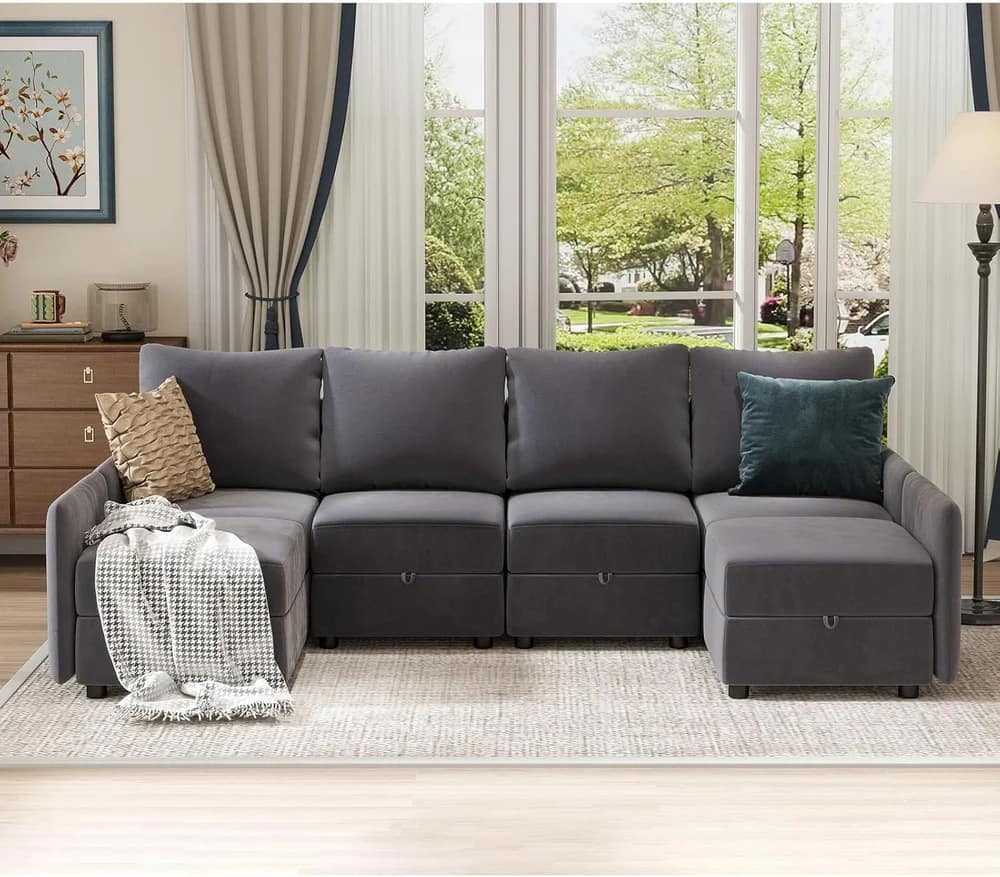
The Comhoma HS301 is the best modular sectional with storage available in 2026. Its fully modular design converts between L-shaped and U-shaped configurations without tools – a genuinely useful feature for households where the room’s function changes regularly.
The standout feature is hidden storage under every seat. Each section lifts independently to reveal a full-depth compartment large enough for blankets, pillows, and seasonal items – transforming the sofa from seating into a meaningful storage solution. The 4-seat base expands with optional ottomans, allowing the sofa to grow from a compact L-shape to a full room-filling arrangement.
Key specs
Base configuration: 4 seats, L/U shaped Optional additions: 1, 2, 3, or 4 ottomans Frame: Sturdy metal structure, built for heavy daily use Storage: Under every seat section Price: From $569.99 (regular $669.99) Shipping: Free to US, 2 to 5 business days Warranty: 1 year Returns: 30 days
Shop Comhoma: comhoma
Best Budget Sectional Range – Comhoma
For buyers looking for a quality sectional at an accessible price point, Comhoma is the strongest brand in this category. Their sectional range covers L-shaped, U-shaped, and modular configurations across multiple fabric options including chenille, corduroy, and terrycloth – all with free US shipping, 30-day returns, and a 1-year warranty as standard.
Comhoma’s approach sets them apart from many budget competitors: several of their sectional models require zero assembly, arriving compressed and simply unfolding into position. Their chenille sectionals are particularly strong for family households – soft, breathable, and significantly more durable than faux leather alternatives at the same price point.
Browse their full sectional range to find the configuration and size that fits your specific room dimensions.
Best for: Budget-conscious buyers, families, open-plan living rooms Free shipping: Yes, all US orders, 2 to 5 business days Shop Comhoma Sectionals: comhoma
Best Premium Mid-Century Sectional – Mid In Mod
For buyers investing in a decade-long sectional with genuine aesthetic ambition, Mid In Mod is the strongest premium option available. Their sectional range is built around authentic mid-century modern design credentials – kiln-dried solid wood frames, sinuous spring suspension, performance velvet upholstery in rich jewel tones, and walnut-finished removable legs that make delivery through tight spaces manageable.
The Albany U-shape modular configuration is their flagship sectional – 140.9 inches wide with seating for six, available in olive green performance velvet with an included ottoman. Real owner reviews consistently confirm the colour matches site photography accurately and the comfort exceeds expectations, with one buyer noting it is “even more comfortable than I anticipated.”
Mid In Mod ships all sectionals free nationwide with a 30-day return policy. Their sectional range also covers L-shaped and corner configurations in multiple velvet colourways beyond olive green – emerald, dark teal, and warm grey are all available depending on the specific model.
Best for: Mid-century modern interiors, style-focused buyers, rooms 16 feet or wider Free shipping: Yes, nationwide Shop Mid In Mod Sectionals: midinmod
Sectional Sofa for Small Rooms – What Actually Works
For smaller rooms, a single curved sofa plus a couple of chairs is easier to move and less visually dominant than a full rounded sectional. The same principle applies to L-shaped sectionals – in rooms under 12 feet wide, the chaise section of an L-shaped sectional can block traffic flow and make the room feel smaller rather than more generous.
For small rooms specifically:
- Choose an L-shaped sectional with the chaise on the shorter wall rather than the longer one
- Look for compact sectionals under 100 inches total – the Comhoma range includes options under 110 inches that work in rooms as small as 11 feet wide
- Use the Homestyler room planning app to test the exact footprint before ordering – see our where to buy furniture guide for the Homestyler link
For more on sofa sizing and placement in smaller rooms, see our curved sofa styling guide – the layout principles for curved sofas apply equally to compact sectionals.
Sectional Sofa for Families and Pets
For households with young children and pets, three specific features matter above all others:
Performance fabric. Any sectional described simply as “fabric” without a specified double rub count should be treated as unknown durability. Look for performance fabric, microfiber, or chenille with verified double rub counts of 30,000 and above.
Removable covers. Sectionals with zippered, machine-washable cushion covers are significantly more practical for family use than fixed covers requiring professional cleaning.
Sturdy metal or solid wood frame. Children sitting, jumping, and placing weight unevenly on sofa arms and backs will quickly reveal any frame weaknesses. The Comhoma HS301’s metal frame structure specifically is designed to withstand heavy weight – relevant for families where the sofa takes significant daily stress.
How to Style a Sectional Sofa Once You Have It
A sectional sofa is the room’s largest and most dominant piece of furniture – everything else in the room is arranged around it rather than the other way around.
Rug sizing: A rug that fits only under the coffee table makes the sectional look unanchored. The rug should extend beneath the front legs of every section of the sofa – for most L-shaped sectionals this means an 8 by 10 foot rug minimum, and often larger.
Coffee table shape: Round or oval coffee tables work best with sectionals because they prevent the corner clashes that rectangular tables create in the concave space of an L-shape. For U-shaped sectionals, a large round table centered in the U is the most effective choice.
Cushions: Layer three to five cushions across the longest section of the sectional, reducing to two on the chaise. Mix sizes and textures – two larger base cushions in a neutral tone, one or two textured accent cushions, and one smaller bold accent or lumbar. See our neutral sofa styling guide for the full formula.
Lighting: A floor lamp in the corner behind where the two sections of the L meet is the single most effective lighting addition for a sectional – it fills the visual dead zone that the sectional creates in that corner and adds atmosphere rather than leaving a visually empty space.
What NOT to Do When Buying a Sectional Sofa
Do not buy without measuring first. The painter’s tape floor test is not optional. A sectional that looks manageable in a showroom can overwhelm a room where the wall clearances are tighter than expected.
Do not choose based on price alone. A sectional at $400 that fails in two years costs more per year than one at $900 that lasts for a decade. The frame construction question – solid hardwood or kiln-dried engineered wood versus particle board – determines the longevity more than almost anything else.
Do not ignore the configuration direction. L-shaped sectionals come in left-facing and right-facing chaise configurations. Getting this wrong means the chaise ends up in front of a window or blocking a doorway. Always confirm which direction the chaise faces before ordering.
Do not choose a fabric that requires professional cleaning. For any sectional used daily, the cleaning code matters. W (water-based cleaning safe) or WS (both water and solvent) are the practical minimums. S (solvent only) or X (vacuum only) fabrics create a significant ongoing maintenance burden.
Final Thoughts
The best sectional sofa for your home is not the one with the best review score or the highest thread count in its marketing – it is the one that fits your specific room dimensions, serves your household’s daily use patterns, and is built to last at the price point you can genuinely invest.
For budget buyers, the Comhoma range delivers construction quality that significantly outperforms the price point – particularly the HS301 with its storage-under-every-seat feature and modular flexibility. For buyers investing in a decade-long piece with genuine aesthetic ambition, the Mid In Mod Albany in performance velvet is the premium sectional that delivers on both style and substance.
Buy the sectional that fits the room. Build the room around the sectional. And measure twice before you order once.
Loved this guide? Pin it to your living room board and save it for the next time you are sofa shopping.
Related posts you might like: