

Most people who buy blackout curtains discover the same problem three days after hanging them. The curtains themselves block light beautifully. But light pours in around the edges – over the top, down the sides, through the gap between the two panels in the middle. The room is darker but not dark.
This is not a product failure. It is a physics problem, and it is one that most blackout curtain guides quietly ignore because fixing it requires more than choosing the right fabric.
This guide covers everything you need to know about blackout curtains in 2026 – how they actually work, what to look for when choosing them, how to solve the edge light problem, which rooms benefit most, and how to style them so they look as good as they perform.
Table of Contents
What Are Blackout Curtains and How Do They Work?
Blackout curtains are window treatments that use a dense, tightly woven or coated fabric to block light from passing through. Unlike standard curtains or even room-darkening curtains, blackout curtains are designed to prevent nearly all light transmission through the fabric itself.
The blackout effect is achieved through one of three construction methods:
Triple-weave construction
Three layers of fabric are woven together – typically two outer layers with a tightly packed black yarn core between them. The black core absorbs light before it can pass through. This construction is the most common in mid-range blackout curtains and produces a soft, fabric-like drape that looks and feels like a regular curtain rather than a lined product.
Foam-backed lining
A polyurethane foam coating is applied to the back of the fabric. This is the most effective light-blocking method and is used in true 100% blackout products. The tradeoff is that foam-backed curtains feel slightly stiffer and do not drape as elegantly as triple-weave options.
Sewn-in blackout liner
A separate blackout liner panel is sewn into the back of a decorative outer curtain. This approach allows for the most design flexibility – the outer curtain can be any fabric or pattern while the liner does the blackout work. It is also the basis for the blackout liner strategy covered later in this guide.
Do Blackout Curtains Actually Work?
Yes – with an important qualification. Blackout curtains block light through the fabric itself extremely effectively. A quality blackout curtain can block 85 to 99% of light transmission through the fabric panel. Research from the National Sleep Foundation shows that even minimal light exposure during sleep suppresses melatonin and fragments sleep cycles – making true blackout curtains one of the most cost-effective bedroom interventions available.
However, the fabric is only part of the equation. The installation determines whether the overall result is truly dark.
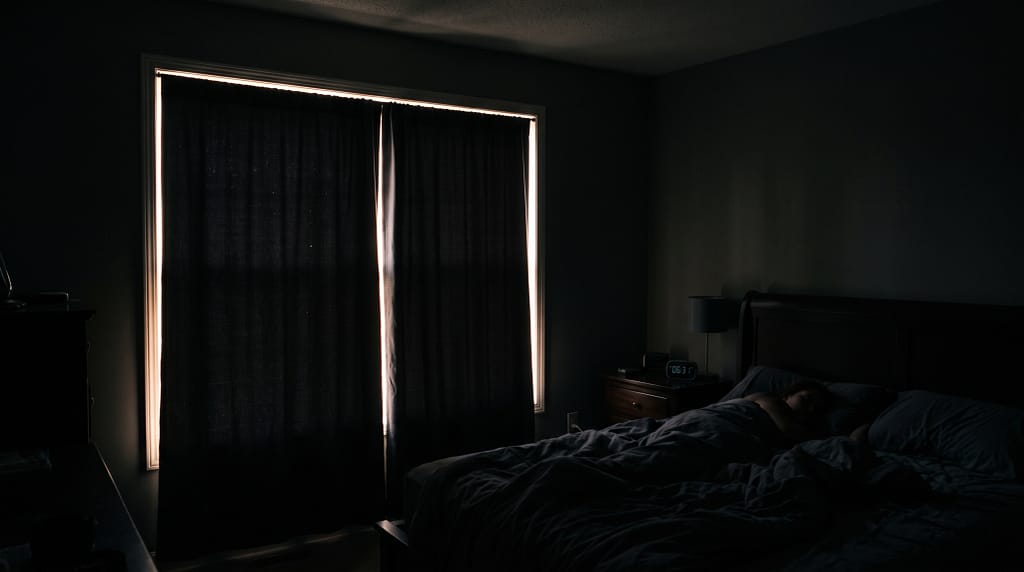
The Edge Light Problem Nobody Talks About
This is the most important section in the entire guide and the one that most blackout curtain articles skip entirely.
Standard curtain rods hold fabric 3 or more inches from the wall. Light pours over the top of the curtain, between the rod and the wall. Grommet and tab-top styles create gaps between each ring where light enters. The two panels meeting in the middle rarely achieve a true light seal. Even the best blackout curtain fabric in the world cannot compensate for these installation gaps.
How to solve the edge light problem
Hang curtains higher and wider than the window. The curtain rod should be mounted 4 to 6 inches above the window frame, not immediately above it. The curtains should extend 6 to 8 inches beyond each side of the window when closed. This eliminates the side light leakage entirely and makes the window appear larger as a bonus.
Use a curtain rod that sits close to the wall. A ceiling-mounted track system or a rod with a very shallow projection eliminates the gap at the top. Alternatively, a blackout valance or pelmet box above the rod blocks the light that would otherwise pour over the top.
Overlap the panels generously. Each curtain panel should overlap the centre by at least 3 to 4 inches when closed rather than meeting edge to edge.
Use magnetic curtain weights or tape. Magnetic tape along the inner edge of each panel, matched with corresponding tape on the wall, creates a light seal at the sides without any additional hardware.
Benefits of Blackout Curtains Beyond Light Blocking
Light blocking is the headline benefit but blackout curtains deliver several additional advantages that make them worth considering even for rooms that do not have a light problem.
Thermal insulation
Blackout curtains do not just block light – they can also help to insulate a room, preventing heat from escaping in winter and keeping cool air in during the summer. This can help reduce home energy costs by keeping indoor temperatures steady. The thermal insulation effect is strongest in foam-backed curtains, where the coating adds a meaningful barrier between the room and the cold glass of the window.
Noise reduction
The density of blackout fabric absorbs sound as well as light. For bedrooms facing a busy road, a neighbour’s garden, or an urban environment, blackout curtains provide meaningful noise reduction – not soundproofing, but a noticeable dampening of external sound.
UV protection
Blackout curtains block UV rays as effectively as they block visible light. This protects furniture, flooring, and artwork from the sun-fading that standard curtains cannot prevent. If your living room or bedroom gets strong direct sunlight for several hours each day, UV protection alone justifies the investment.
Privacy
The same density that blocks light from outside entering also prevents visibility from outside at night – when interior lighting would otherwise make the room clearly visible from the street. Blackout curtains provide full privacy at all hours without requiring net curtains or blinds underneath.
How to Choose Blackout Curtains – What to Look For
With hundreds of options available, these are the specific factors that determine whether a blackout curtain actually performs as described.
Light blocking percentage
Manufacturers typically describe products as “room darkening” (blocking 60 to 85% of light), “blackout” (85 to 99%), or “total blackout” (99 to 100% through the fabric). Be aware that room darkening and blackout are often used interchangeably in marketing – check the specific percentage stated rather than relying on the category name alone.
Fabric weight and GSM
GSM (grams per square metre) is the most reliable indicator of blackout curtain quality. For genuine blackout performance, look for a minimum of 300GSM. Premium options run to 340GSM and above. Lighter fabrics may be described as blackout but will allow significant light transmission.
Header style
The way the curtain attaches to the rod affects both the look and the light-sealing performance. Grommet headers create regular gaps between rings. Pencil pleat headers create a tight, dense gather. Eyelet headers are similar to grommets. For maximum light blocking, pencil pleat or rod pocket styles with minimal gaps perform best.
Size – the most common mistake
Most people buy curtains that are too narrow and too short. For blackout performance, each curtain panel should be 1.5 to 2 times the width of the window – not the total curtain width. A 120cm window needs panels totalling 180 to 240cm of fabric. For length, floor-to-ceiling curtains hung from close to the ceiling create the most dramatic and most light-sealed result. Curtains that stop at the windowsill leave significant light entry at the bottom.
Thermal lining
For rooms where energy efficiency is a priority, look specifically for thermal-lined blackout curtains rather than standard blackout fabric. The thermal lining adds meaningful insulation beyond what the blackout layer alone provides.
Best Blackout Curtains by Room
Different rooms have different priorities – a nursery needs maximum darkness at all hours, a living room needs style as much as function, and a bedroom needs to balance both. Here is what to prioritise by room.
Blackout Curtains for Bedrooms
The bedroom is where blackout curtains deliver the most measurable impact. Even minimal light exposure during sleep – a street lamp, early morning summer sunrise, or a neighbour’s motion-activated security light – suppresses melatonin and fragments sleep cycles. For shift workers sleeping during daylight hours, a parent managing infant nap schedules, or anyone who wakes with the sunrise and struggles to fall back asleep, properly installed blackout curtains are genuinely transformative.
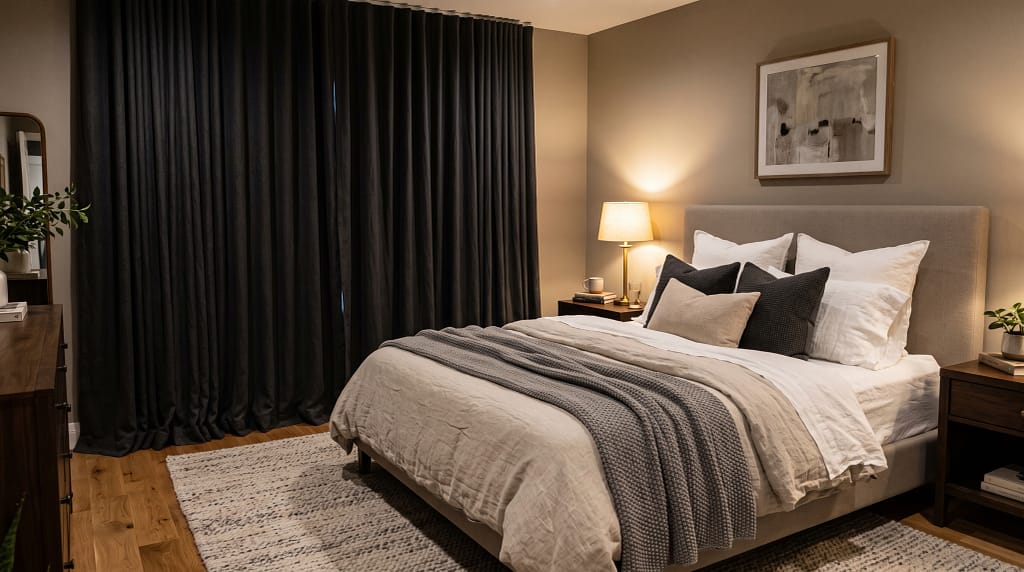
What to look for in bedroom blackout curtains
For a bedroom, prioritise light blocking percentage above style – choose the highest GSM and the tightest header style available in your preferred colour. Neutral colours (charcoal, navy, forest green, warm cream) work across most bedroom palettes and are the most forgiving as the room evolves.
Hang them floor-to-ceiling from as close to the ceiling as possible. Mount the rod 4 to 6 inches above the window frame. Use the edge-sealing techniques from the earlier section. A bedroom done this way creates genuine darkness regardless of the time of day or season.
For bedroom colour palette guidance that coordinates with blackout curtains, see our living room and bedroom colour palettes guide – deep charcoal and forest green blackout curtains both work beautifully against the warm palette directions dominating 2026 interiors.
Blackout Curtains for Nurseries
Nurseries may have the strongest case of any room for true blackout curtains. Infant sleep is fundamentally tied to light cues – melatonin production begins only in darkness, which means a nursery that is not properly dark at nap time is directly working against the sleep you are trying to achieve.
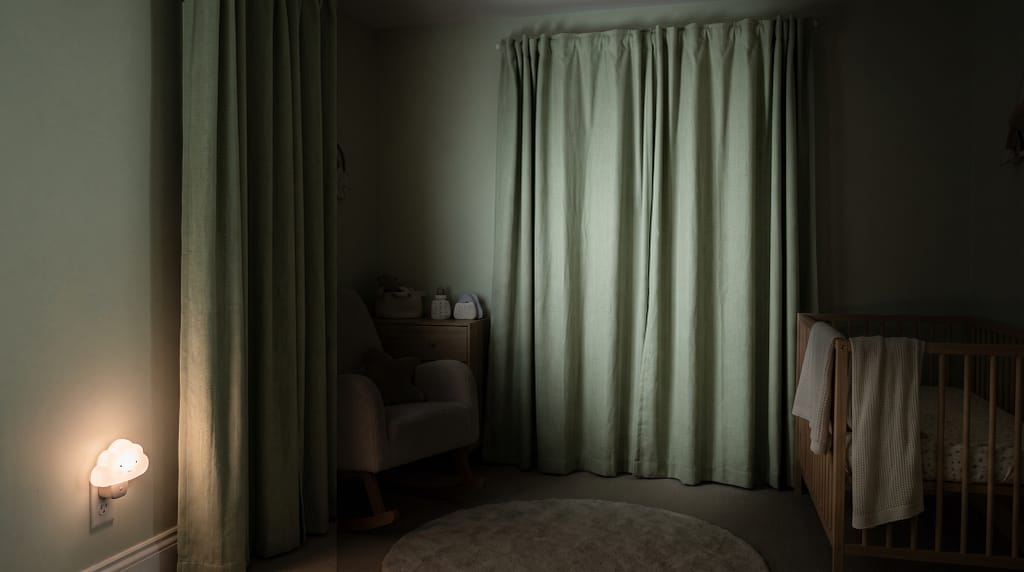
What to look for in nursery blackout curtains
For a nursery, 100% total blackout performance is the priority over aesthetics. Foam-backed liners achieve the highest light-blocking performance and are the most practical choice for a room where appearance matters less than function.
The nursery is also the room where portable blackout solutions are most useful – suction-cup blackout panels that attach directly to the window glass eliminate edge light entirely and are easily removed and packed for travel. These do not replace permanent blackout curtains but work extremely well as a supplement.
Safety note: ensure all curtain cords and ties are completely out of reach of the cot and any position where a child could stand. Cordless systems or tie-back hooks positioned high on the wall are the safest options.
Blackout Curtains for Living Rooms
The living room presents the most complex blackout curtain brief because function and style carry equal weight. A living room curtain needs to look intentional as a design element during the day – when the curtains are likely open and functioning as pure decoration – while delivering meaningful light control when drawn.
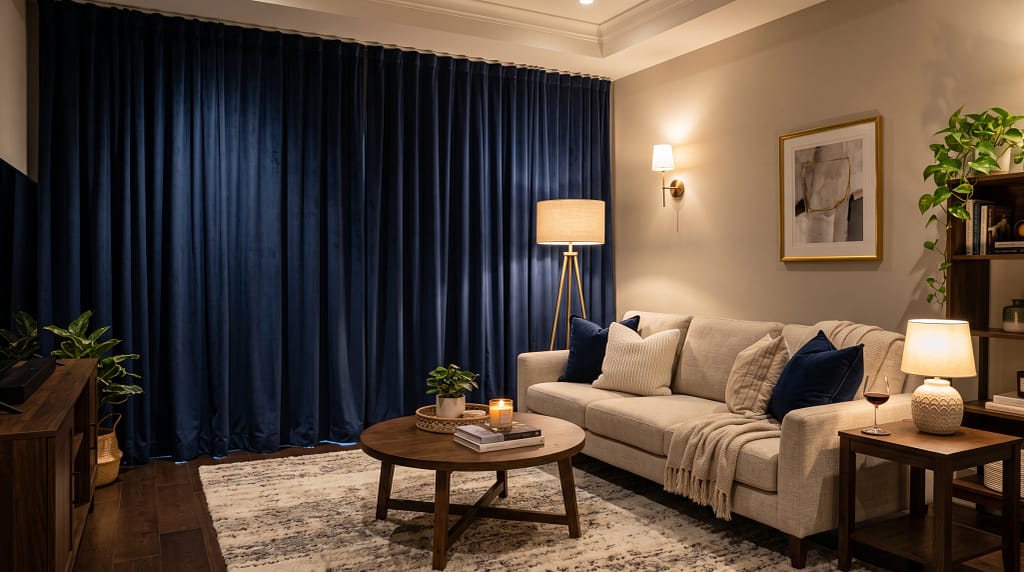
What to look for in living room blackout curtains
In a living room, velvet blackout curtains are one of the strongest choices available in 2026. The velvet fabric provides the aesthetic richness and depth that linen or polyester alternatives cannot match, while the blackout lining behind it does the functional work. The velvet pile also adds meaningful acoustic dampening – reducing echo in hard-floored rooms.
For styling guidance on how blackout curtains interact with sofa choices and room palettes, see our neutral sofa styling guide – heavy blackout curtains in a deep tone are specifically covered as one of the most effective ways to give a neutral sofa room visual weight and atmosphere.
Living room blackout curtains work particularly well in home cinema setups, reading rooms, and any south or west-facing room that gets strong afternoon sun. The UV blocking effect protects hardwood floors, rugs, and upholstered furniture from the bleaching that direct summer sunlight causes over time.
Blackout Curtain Styles and What They Look Like
One of the most persistent misconceptions about blackout curtains is that they are all heavy, dark, and institutional-looking. The 2026 blackout curtain market is nothing like that. Here are the main style directions:
Linen-look blackout curtains
Linen-textured blackout curtains have become one of the most popular choices in 2026 because they deliver the relaxed, organic look of natural linen while providing the blackout performance of a synthetic fabric. They work particularly well in Japandi, Scandinavian, and earthy-toned rooms. Available in cream, warm white, sage green, and natural oatmeal.
Velvet blackout curtains
The most luxurious option and one of the strongest 2026 interior choices. Velvet blackout curtains in jewel tones – emerald, sapphire, deep plum – align directly with the Neo Deco direction that is replacing quiet luxury in 2026 interiors. The pile catches light dramatically and makes even a modest-sized room feel deliberately designed.
Sheer blackout curtains
A relatively recent development – a sheer-looking outer fabric paired with an integrated blackout liner that is visible only when the curtain is backlit. In daylight with the curtain closed, the room appears to have a sheer, light-filtering curtain. At night or in direct sun, the blackout liner activates. This style works best in rooms where the day and night aesthetic need to be very different.
Neutral tones remain popular
Neutral tones remain popular, with sage green and warm terracotta emerging as trending accent colours for blackout curtains in 2026. Both integrate naturally with the earthy, warm interior palette direction of the year.
How to Style Blackout Curtains So They Look Good
Blackout curtains have a reputation for looking heavy and institutional – a reputation that comes from bad installation rather than the curtains themselves. These rules prevent that outcome.
Always hang them floor-to-ceiling
Curtains that stop at the windowsill or just below it look like an afterthought. Floor-to-ceiling curtains hung from close to the ceiling make the window look taller, the room look larger, and the curtains look considered rather than functional.
Use more fabric than you think you need
A curtain that is barely wide enough to cover the window when closed looks thin and cheap. The gathered, full look that makes curtains look expensive comes from using 1.5 to 2 times the window width of fabric. This also improves the light seal when drawn.
Layer with a sheer or voile
Pairing blackout curtains with a sheer panel in front gives you two distinct looks from one window – the sheer panel diffuses light softly during the day while the blackout curtains provide full darkness when drawn behind it. This layered approach is how hotel rooms achieve both natural light during the day and true darkness at night.
Match the header style to the room’s aesthetic
Grommet headers read as contemporary and casual. Pencil pleat headers read as more traditional and formal. Eyelet headers sit between the two. Choose the header style that belongs to the room’s overall design language rather than defaulting to whatever is cheapest.
For more on how lighting and window treatments interact to create atmosphere, see our lighting control guide – the relationship between blackout curtains and layered artificial lighting is covered specifically in the bedroom and living room sections.
Blackout Curtain Liners – The Budget Alternative
If you have existing curtains you love but they let too much light through, a blackout curtain liner is the most affordable and least disruptive solution. A blackout liner is a separate panel that clips or hooks onto your existing curtain rings or rod, hanging behind the decorative curtain and doing the blackout work invisibly.
Placing a blackout curtain liner under your regular curtain can be an effective and often more economical way to get the blackout effect. You can buy any curtains that fit your style and pair them with a blackout curtain or blackout curtain liner.
Liners are available in standard sizes and clip-on or hook-on versions require no tools to install. The tradeoff is that liners add bulk to the curtain stack, which can make the window look slightly heavier, and they do not solve the edge light problem without additional sealing steps.
Where to Buy Blackout Curtains and Furniture to Match
Pamapic
Pamapic carries indoor and outdoor furniture including sofas and sectionals that pair beautifully with blackout-curtained rooms. If you are building a darker, more atmospheric bedroom or living room around your blackout curtains, their sofa range provides the rich, coordinated foundation the room needs. Shop Pamapic: pamapicamazonsellerus
The Handlooms
For layering textiles alongside your blackout curtains – rugs, throws, and cushion covers that complement the warm, earthy palette direction of 2026 – The Handlooms is the strongest artisan textile source available. A handwoven jute rug and a mudcloth throw alongside deep blackout curtains creates a room that feels layered and intentional rather than simply dark. Shop The Handlooms: thehandlooms.com
Pure Scentum
A blackout curtained room – particularly a bedroom or reading nook – benefits more from atmospheric candles than almost any other room type. The darkness amplifies the glow and the scent, making a Pure Scentum candle on a bedside table one of the most effective finishing touches available. Shop Pure Scentum: pure-scentum
Homestyler
Before hanging any curtains, planning the full window and room layout in Homestyler is the most effective way to see how curtain length, colour, and placement will look in your specific room before committing. Their 3D room planner lets you test floor-to-ceiling versus sill-length curtains and see the visual difference instantly. Try Homestyler: homestyler
Final Thoughts
Blackout curtains are one of the most practical home investments available in 2026 – they improve sleep quality, reduce energy costs, protect furniture from UV damage, and reduce noise, all from a single window treatment.
The key to getting them right is solving three things together: choosing a fabric with a genuine high GSM and blackout construction, installing them wide and high enough to eliminate edge light, and styling them with enough fabric fullness that they look as deliberate as they perform.
Done correctly, blackout curtains do not look heavy or institutional. They look exactly like the floor-to-ceiling, light-controlling, atmosphere-creating window treatment that every well-designed room deserves.
Loved this guide? Pin it to your home decor board and save it for the next time you are choosing curtains.
Related posts you might like:




[…] more on what to look for in blackout curtains specifically, see our complete blackout curtains guide which covers GSM weights, edge light solutions, and installation […]