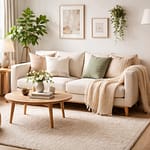

Thinking a sectional sofa won’t work in your small living room? Think again. With the right approach, a sectional can actually be the smartest seating solution for compact spaces, offering more seating capacity than traditional sofas while creating a cozy, defined living area.
In this comprehensive guide, you’ll learn exactly how to select a sectional that fits your small space perfectly, making your living room feel larger and more functional.
Why Sectionals Can Work Beautifully in Small Spaces
Before we dive into selection criteria, let’s address the elephant in the room: won’t a sectional make my space feel cramped?
Not if you choose wisely. Small-scale sectionals can actually maximize seating efficiency by utilizing corner space that often goes unused. Unlike separate pieces that require gaps between them, a sectional creates a continuous seating arrangement that accommodates more people in less floor space.

Step 1: Measure Your Space Accurately
This is non-negotiable. Before you fall in love with any sectional, you need precise measurements.
What to Measure:
- Room dimensions (length and width)
- Doorways and hallways the sofa must pass through
- Ceiling height (for visual proportion)
- Existing furniture you’re keeping
- Traffic flow paths (aim for 30-36 inches of walking space)
Pro Tip: Use painter’s tape on your floor to outline the sectional’s footprint. Live with this layout for a few days to ensure it doesn’t obstruct natural movement patterns.
Ideal Sectional Sizes for Small Rooms:
- Very small rooms (under 150 sq ft): Look for sectionals under 80 inches on the longest side
- Small rooms (150-200 sq ft): Sectionals between 80-95 inches work well
- Compact rooms (200-250 sq ft): You can accommodate sectionals up to 100 inches
Step 2: Choose the Right Configuration
Not all sectional configurations are created equal for small spaces. Here’s how different layouts perform:
Best Configurations for Small Rooms:
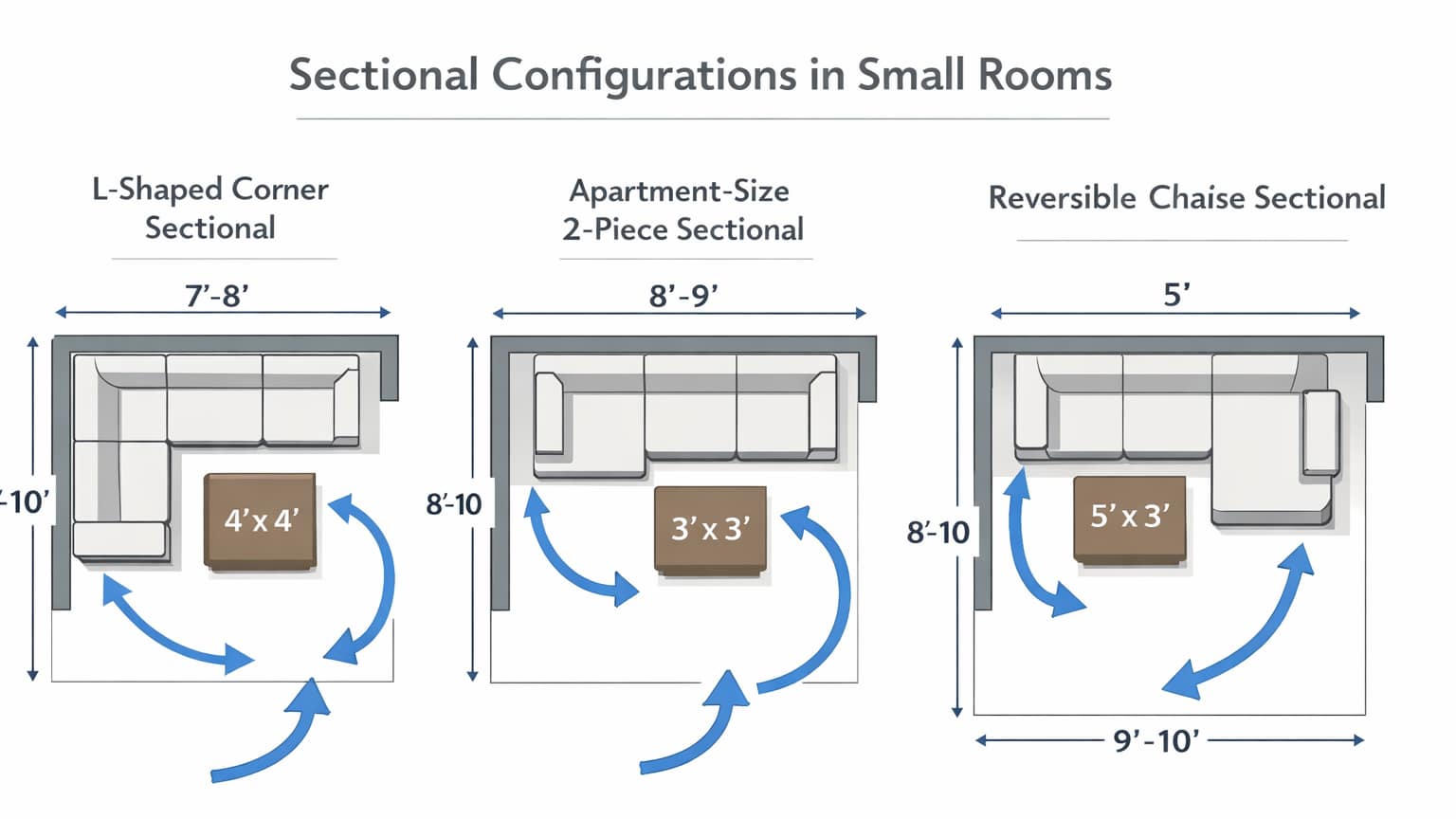
L-Shaped Sectionals: The classic choice for small spaces. Position it in a corner to maximize floor space in the center of the room.
- Best for: Square or slightly rectangular rooms
- Seating capacity: 4-5 people comfortably
- Space efficiency: Excellent
Apartment-Size Sectionals: Specifically designed with smaller proportions, narrower arms, and compact dimensions.
- Typical depth: 32-36 inches (vs. 40+ inches for standard)
- Arm width: 4-6 inches (vs. 8-12 inches)
- Best for: Very tight spaces under 150 square feet
Reversible Chaise Sectionals: The chaise can be positioned on either side, giving you flexibility if you move or rearrange.
- Best for: Rooms where you might need layout flexibility
- Consideration: Ensure the chaise depth doesn’t block walkways
Configurations to Avoid:
- U-shaped sectionals: Too bulky for most small spaces
- Sectionals with recliners: Require extra clearance behind
- Oversized chaises: Can overwhelm the room’s proportions
Step 3: Consider Scale and Proportions
A sectional that’s technically the “right size” can still look wrong if the proportions are off.
Key Proportion Guidelines:
Arm Style Matters: In small rooms, every inch counts. Compare these arm styles:
- Track arms: Sleek, modern, minimal width (4-6 inches)
- English rolled arms: Traditional but bulky (10-12 inches)
- Sloped arms: Mid-range style and width (6-8 inches)
Back Height Considerations: Lower backs (30-32 inches) create visual openness and don’t block sightlines, making rooms feel larger. Higher backs (34-36 inches) offer more support but can feel imposing in small spaces.
Seat Depth Standard: 22-24 inches (most versatile) Deep: 26-28 inches (comfortable for lounging but can overwhelm small rooms)
Leg Style: Exposed legs create a sense of airiness by allowing visual space underneath. Skirted or block-leg styles make furniture look heavier.

Step 4: Select Colors and Fabrics Strategically
Your material choices can make or break the visual spaciousness of your room.
Color Psychology for Small Spaces:
Light and Neutral Colors: Light gray, beige, soft white, and taupe reflect more light and recede visually, making spaces feel larger.
Monochromatic Schemes: Matching your sectional to your wall color creates visual continuity and expands perceived space.
Bold Colors: Use Carefully Deep navy, forest green, or charcoal can work if balanced with lighter elements, but they visually advance and can make rooms feel smaller.
Fabric Selection:
Performance Fabrics: Stain-resistant, durable, ideal for high-traffic homes or homes with kids and pets.
Leather or Faux Leather: Easier to clean, ages well, but can feel sticky in hot weather. Adds visual weight.
Linen or Cotton Blends: Breathable, casual aesthetic, but wrinkles easily and shows stains.
Velvet: Luxurious but shows wear patterns and can look heavy in small spaces.
Pro Tip: Choose medium-toned fabrics with subtle patterns or textures. They hide dirt better than solid light colors and feel less heavy than dark solids.
Step 5: Prioritize Multi-Functional Features
In small spaces, furniture should work overtime.
Space-Saving Features to Consider:
Storage Sectionals: Hidden storage under chaise or lift-up seats provides valuable space for blankets, pillows, or off-season items.
Sleeper Sectionals: Pull-out or fold-down beds transform your living room into a guest room when needed.
Modular Sectionals: Individual pieces that can be reconfigured as your needs change. Perfect for renters or those who rearrange frequently.
Nesting or Ottoman Coffee Tables: Pair your sectional with flexible coffee table options that can be moved or tucked away.

Step 6: Think About Traffic Flow and Layout
Even the perfect sectional fails if it creates an obstacle course.
Layout Principles:
The 3-Foot Rule: Maintain at least 30-36 inches of clearance for main walkways. You should be able to walk comfortably without turning sideways.
Floating vs. Wall-Hugging: Don’t automatically push your sectional against the walls. Floating it slightly (even 6-12 inches) can create better traffic flow and make the room feel intentionally designed.
Coffee Table Distance: Keep 14-18 inches between your sectional and coffee table. Close enough to reach drinks, far enough to avoid shin bruises.
TV Viewing Distance: For a 55-inch TV, sit 7-9 feet away. For 65-inch, sit 8-10 feet away. Ensure all sectional seats have decent viewing angles.
Conversation-Friendly Arrangement: Position the sectional so people can make eye contact easily. L-shapes naturally encourage conversation.
Step 7: Consider Your Lifestyle Needs
The “perfect” sectional depends on how you actually live.
Match Your Sectional to Your Life:
Families with Young Children:
- Performance fabrics that resist stains
- Rounded corners for safety
- Darker colors or patterns
- Removable, washable covers
Pet Owners:
- Leather or tight-weave fabrics (less claw snags)
- Elevated legs for easier cleaning underneath
- Neutral colors that hide fur
Entertainers:
- Maximum seating capacity
- Modular pieces that can reconfigure
- Durable upholstery
- Easy-to-clean surfaces
Nappers and Loungers:
- Chaise component
- Deeper seats (24+ inches)
- Softer cushion fill
- Adequate back support
Renters:
- Modular or sectional pieces that separate
- Neutral colors for versatility
- Lightweight for easier moving
- Reversible configurations
Common Mistakes to Avoid
Learn from others’ errors:
- Buying before measuring doorways – Many sectionals won’t fit through standard 30-inch doors
- Choosing too-deep seats – You want to sit comfortably with back support, not perch on the edge
- Ignoring arm height – Arms that are too high make laptops and side tables awkward
- Forgetting about cleaning access – Can you vacuum around and under it?
- Selecting a fixed configuration – If you might move, modular is safer
- Going too matchy-matchy – Some visual variety creates interest
- Buying the floor model – It’s been sat on by thousands; negotiate accordingly

Top Sectional Styles for Small Living Rooms
Modern Minimalist
Clean lines, low profiles, neutral palettes. Best for contemporary spaces that prioritize simplicity.
Scandinavian
Light woods, soft fabrics, tapered legs, muted colors. Perfect for creating airy, hygge-inspired spaces.
Mid-Century Modern
Tufted details, angled legs, retro silhouettes. Adds personality without overwhelming.
Contemporary Transitional
Blends traditional comfort with modern aesthetics. Most versatile style that works with various decor.
Industrial
Leather upholstery, metal accents, clean shapes. Great for loft-style or urban apartments.
Where to Shop for Small-Space Sectionals
Online Retailers:
- Article – Modern designs, apartment-size options
- Burrow – Modular, easy assembly, built-in USB ports
- Interior Define – Customizable dimensions and fabrics
- West Elm – Contemporary styles, frequent sales
- IKEA – Budget-friendly, compact options
Brick-and-Mortar:
- Crate & Barrel – Quality construction, apartment collection
- Room & Board – American-made, excellent customer service
- Bob’s Discount Furniture – Budget options, quick delivery
- Local furniture stores – Negotiable prices, supporting local business
Budget Considerations:
- Under $1,000: IKEA, Wayfair, Amazon
- $1,000-$2,500: Article, Burrow, Target
- $2,500-$5,000: West Elm, Crate & Barrel, Interior Define
- $5,000+: Room & Board, Design Within Reach, custom furniture makers
Final Checklist Before You Buy
Print this checklist and take it shopping:
- Measured room, doorways, and hallways
- Tested layout with painter’s tape
- Confirmed seating capacity meets needs
- Checked arm, back, and seat dimensions
- Considered traffic flow (30-36 inch clearance)
- Selected appropriate color for space
- Evaluated fabric durability for lifestyle
- Confirmed delivery and assembly options
- Read reviews about comfort and quality
- Compared prices across multiple retailers
- Verified return policy (crucial for online purchases)
- Sat on it in person (if possible)
Conclusion:
Choosing a sectional for a small living room isn’t about compromising on comfort, it’s about being strategic with your selection. By focusing on appropriate scale, smart configuration, and thoughtful styling, you can enjoy the luxury of a sectional while maintaining a spacious, functional living area.
Remember: the best sectional for your small space is one that fits your measurements, matches your lifestyle, and makes you excited to come home every day.
Ready to transform your small living room? Start by measuring your space today, tape out your ideal layout, and begin your search with confidence. Your perfect small-space sectional is out there waiting for you.
Frequently Asked Questions
What size sectional is best for a 10×12 room? For a 10×12 foot room (120 square feet), look for sectionals no larger than 80-85 inches on the longest side. An L-shaped configuration works best, positioned in a corner to maximize floor space.
Should I get a sectional or sofa for a small living room? A sectional can actually be more space-efficient than a sofa-plus-chairs setup because it eliminates gaps between pieces and utilizes corner space. Choose a compact L-shaped sectional if your room is under 200 square feet.
What color sectional makes a room look bigger? Light colors like soft gray, beige, cream, or light blue reflect more light and make spaces feel larger. Matching your sectional closely to your wall color creates visual continuity that expands perceived space.
How much space should be between a sectional and wall? While you can place a sectional against the wall, leaving 6-12 inches of space creates better traffic flow and makes the room feel more intentionally designed rather than cramped.
Can you put a sectional in the middle of a room? Yes, floating a sectional (pulling it away from walls) can actually improve traffic flow and create distinct zones in open-concept spaces. Ensure you maintain 30-36 inches of walkway clearance around all sides.
Are apartment-size sectionals comfortable? Modern apartment-size sectionals are designed with comfort in mind despite their compact dimensions. Look for models with quality cushioning, appropriate seat depth (22-23 inches), and adequate back support.