
If you’ve ever dragged a sofa into your living room only to realize it swallows the entire space, you’re not alone. Finding the right sofa for a small living room is one of the most common and most frustrating furniture challenges for US apartment dwellers and condo owners. This sofa size guide for small living rooms breaks down everything you need to know: the right dimensions, the smartest styles, layout tricks, and storage options that make your couch work twice as hard.
Why Getting Sofa Size Right Is Everything in a Small Space
In most US apartments and smaller homes, the living room doubles as a lounge, home office, and occasional guest room. The sofa is the centerpiece of that space, and if you get the size wrong, it makes the whole room feel cramped, dark, and dysfunctional. An oversized sofa leaves no room to breathe; an undersized one makes the room feel sparse and oddly proportioned.
The good news? With a few key measurements and some smart style choices, you can find a sofa that fits perfectly, and actually makes your room feel bigger in the process. Let’s start with the numbers.

Sofa Dimensions 101: What Size Works for Small Rooms?
Before you fall in love with any sofa online, you need to understand the standard size ranges and what each one actually looks like in a small room. This is the heart of any practical sofa size guide for small living rooms.
Standard Sofa Sizes at a Glance
| Sofa Type | Width | Depth | Seats | Best Room Size | Small Room Fit |
|---|---|---|---|---|---|
| Loveseat | 52″–66″ | 28″–34″ | 2 | Under 150 sq ft | ✔ Excellent |
| Apartment Sofa | 68″–80″ | 30″–36″ | 2–3 | 120–200 sq ft | ✔ Ideal |
| Standard 3-Seat | 84″–96″ | 32″–40″ | 3 | 200–300 sq ft | ✗ Often Too Large |
| Compact Sectional | 95″–110″ | 60″–75″ | 3–4 | 150–250 sq ft | ✔ Works If Planned |
| Sleeper Sofa | 70″–88″ | 34″–40″ | 2–3 | 180+ sq ft | ✔ Great Dual Use |
Pro Tip: For most small living rooms in the US, think NYC studios, Chicago one-bedrooms, or LA apartments, an apartment-sized sofa between 72″ and 80″ wide is your sweet spot. It seats 2–3 comfortably without overwhelming the room.
How to Measure Your Living Room Before You Buy
Never buy a sofa without taking these measurements first:
- Measure the wall space where the sofa will sit. Write it down, don’t trust your memory.
- Subtract 6 inches on each side of that measurement to allow breathing room around the sofa ends.
- Check walkway clearance. Leave at least 18 inches between the sofa’s front edge and any coffee table or opposite wall. The US comfort standard for easy passage is 30–36 inches.
- Measure your doorways and hallways. A sofa that can’t fit through the door is the most expensive lesson in furniture shopping.
- Use painter’s tape on the floor to mock up the sofa’s footprint before you order. This takes five minutes and saves you from a nightmare return.

The Best Sofa Styles for Small Living Rooms
Once you’ve got your measurements, it’s time to think about style. Not every sofa shape works in a compact room. For a deeper dive into the top-rated models available right now, see our full guide to the Best Sofas for Small Living Rooms (Size, Style & Layout Guide).
Loveseats: The Underrated Champion
The loveseat, typically 52″ to 66″ wide, is criminally underrated. Many people assume it’s “too small,” but in a room under 150 square feet, a loveseat creates breathing room, making the entire space feel intentional rather than cramped.
Pros:
- Leaves maximum floor space visible
- Easy to rearrange for guests
- Wide stylish range available at Pottery Barn, IKEA, and Article
- Usually more affordable than full sofas
Cons:
- Seats only 2 comfortably
- Can look sparse in larger small rooms
- May feel disproportionate next to a large TV
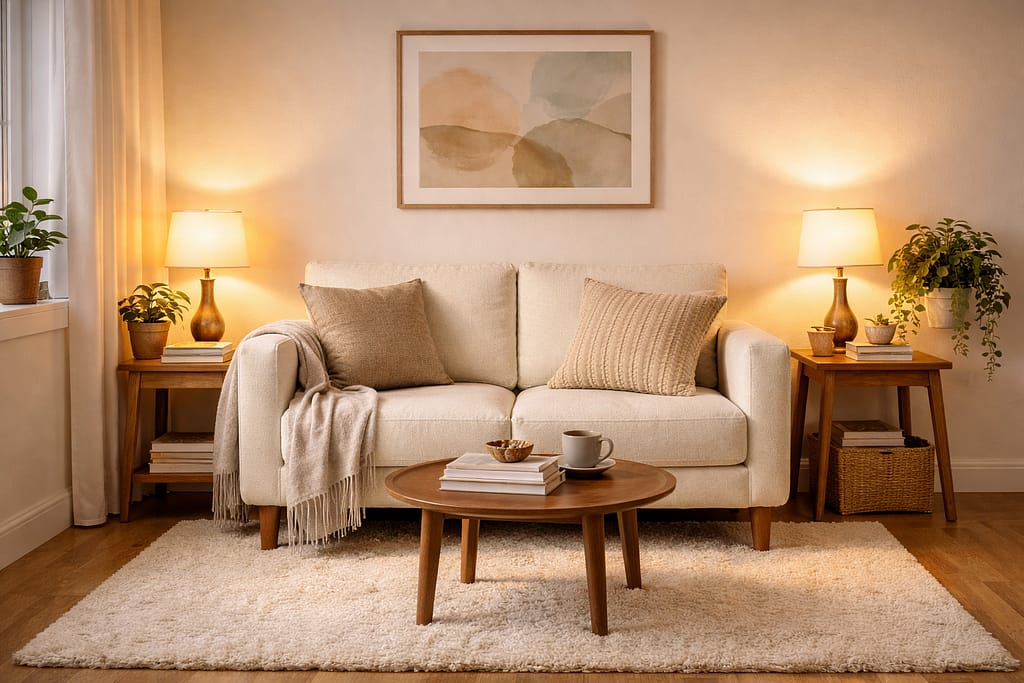
Apartment-Sized Sofas: The Sweet Spot
The apartment-sized sofa (68″–80″) is purpose-built for small spaces. Brands like IKEA (KIVIK), West Elm (Andes), and Wayfair all offer excellent apartment-scale options. Look for sofas with exposed legs, they visually lift the piece and make rooms feel larger, as well as tight-back cushions that reduce visual bulk, and neutral upholstery that recedes into the space rather than commanding it.
Sleeper Sofas: Double Duty in Tiny Spaces
If you regularly host guests but don’t have a spare bedroom, a quality sleeper sofa is one of the smartest investments you can make. Modern sleeper sofas have come a long way from the lumpy pull-outs of the past. Brands like Burrow, Article, and Joybird now offer slim-profile sleepers that look nothing like a hideaway bed. Just factor in the clearance needed when the bed is fully open, typically 5 to 6 feet of floor space in front of the sofa.
Should You Get a Sectional for a Small Room?
This is the big debate in small-space decorating. Sectional sofas seem counterintuitive for compact rooms, but a well-chosen compact sectional can actually maximize seating without devouring your floor plan. The key word is compact. For everything you need to choose the right one, read our guide to the Best Sectional Sofa for Small Apartments.
When a Sectional Works (and When It Doesn’t)
When it works:
- Open-plan studio or combined living/dining space
- L-shape used to visually define a seating zone
- Room is at least 12 × 14 feet
- Each arm of the sectional is under 100 inches
When it doesn’t:
- Enclosed room under 150 square feet
- Multiple doorways limiting available wall space
- U-shape sectional in a room smaller than 14 × 18 feet
- The sofa cannot be walked around comfortably from multiple sides
Sizing Rule: In a small room, each arm of the sectional should be no longer than 95–100 inches. Go beyond that and you’ve created a furniture obstacle course, not a living room.

Storage Sofas: The Smart Choice for Small Spaces
When floor space is at a premium, every piece of furniture needs to earn its spot. A storage sofa, one with under-seat compartments, a built-in ottoman, or a convertible bed with storage drawers, does the work of two pieces of furniture without taking up extra square footage.
Storage sofas are especially popular in US studio apartments and one-bedrooms where closet space is limited. Common configurations include under-seat hinged storage (great for blankets and board games), storage ottomans that pair with a main sofa, and sofa beds with built-in drawers underneath. For our top picks in this category, see our article on the Best Sofa for Small Living Room with Storage.
Popular options worth looking at:
- IKEA FRIHETEN — An iconic apartment-sized sleeper with hidden chaise storage. Affordable and widely available across the US.
- Wayfair Andover Mills sleepers — Multiple storage configurations, well-suited to studios and one-bedrooms.
- Article Ceni sofa — Modern low profile, under-seat storage, and available in multiple neutral colorways.
Layout Tips: How to Arrange Your Sofa in a Small Living Room
Even the perfectly sized sofa can make a room feel cramped if it’s placed wrong. These are the layout principles interior designers rely on in small US homes.
The Float-It Rule
Pushing your sofa flat against the wall is the most common small-room mistake. Floating it even 4 to 6 inches from the wall creates the illusion of depth and makes the room feel more considered and designed. It also allows you to tuck a narrow console table behind the sofa for extra storage, one of the smartest small-space moves there is.
Against-the-Wall vs. Floating Placement
- Against the wall: Best for rooms narrower than 11 feet where you genuinely need every inch of walkway.
- Floating: Best when the room is 12 feet wide or more and you want to define a conversational zone. Anchor the grouping with a rug that extends 6–8 inches beyond the sofa on each side.
- Angled placement: A sofa placed at 45 degrees in a corner can unlock diagonal sight lines that make a square room feel noticeably larger.
Visual Tricks That Make Your Sofa Look Smaller
- Choose a light or mid-tone neutral, cream, warm gray, natural linen. Dark sofas advance visually and compress rooms.
- Pick a sofa with visible legs so light passes underneath, making the piece look lighter and the floor feel larger.
- Place a rug that extends at least 6–8 inches beyond each side of the sofa to frame the seating area proportionally.
- Choose low-profile, tight-back cushions over high-back, pillow-heavy designs to cut visual mass.
- Add a narrow console table behind a floating sofa for both storage and a visual anchor separating it from the wall.

Final Thoughts: Finding Your Perfect Small-Room Sofa
Shopping for a sofa in a small living room doesn’t have to be overwhelming. With the right measurements, a clear understanding of sofa types, and a few clever layout principles, you can find a piece that makes your small space feel stylish, functional, and completely intentional.
To recap the golden rules from this sofa size guide for small living rooms:
- Measure your room first, always, and use painter’s tape to preview the footprint before you order.
- Stick to apartment-sized sofas (68″–80″) or loveseats for rooms under 180 square feet.
- Consider a compact sectional only if your room is open-plan and at least 12 × 14 feet.
- Choose light colors, visible legs, and tight-back cushions to reduce visual weight.
- Don’t overlook storage sofas, they are one of the highest-impact investments in small-space decorating.
Ready to shop? Start with our curated roundup, Best Sofas for Small Living Rooms then narrow down by need: compact sectionals in Best Sectional Sofa for Small Apartments, or hidden-storage picks in Best Sofa for Small Living Room with Storage.




hello world
hello world
[…] For more on finding the right fit, read our sofa size guide for small living rooms → […]
[…] help figuring out exactly how much sofa your room can handle, our complete sofa size guide for small living rooms has a full measurement […]
[…] The Complete Sofa Size Guide for Small Living Rooms […]
[…] a full breakdown of sofa proportions that work in different room sizes, our sofa size guide covers how leg height interacts with seat depth and overall sofa […]
[…] The Complete Sofa Size Guide for Small Living Rooms – Clevar Closet […]