
A $1000 suit isn’t ten times better than a $100 suit, but it will last 10 times longer and fit infinitely better. Here’s exactly what you’re paying for when you invest in an expensive suit versus a cheap suit.
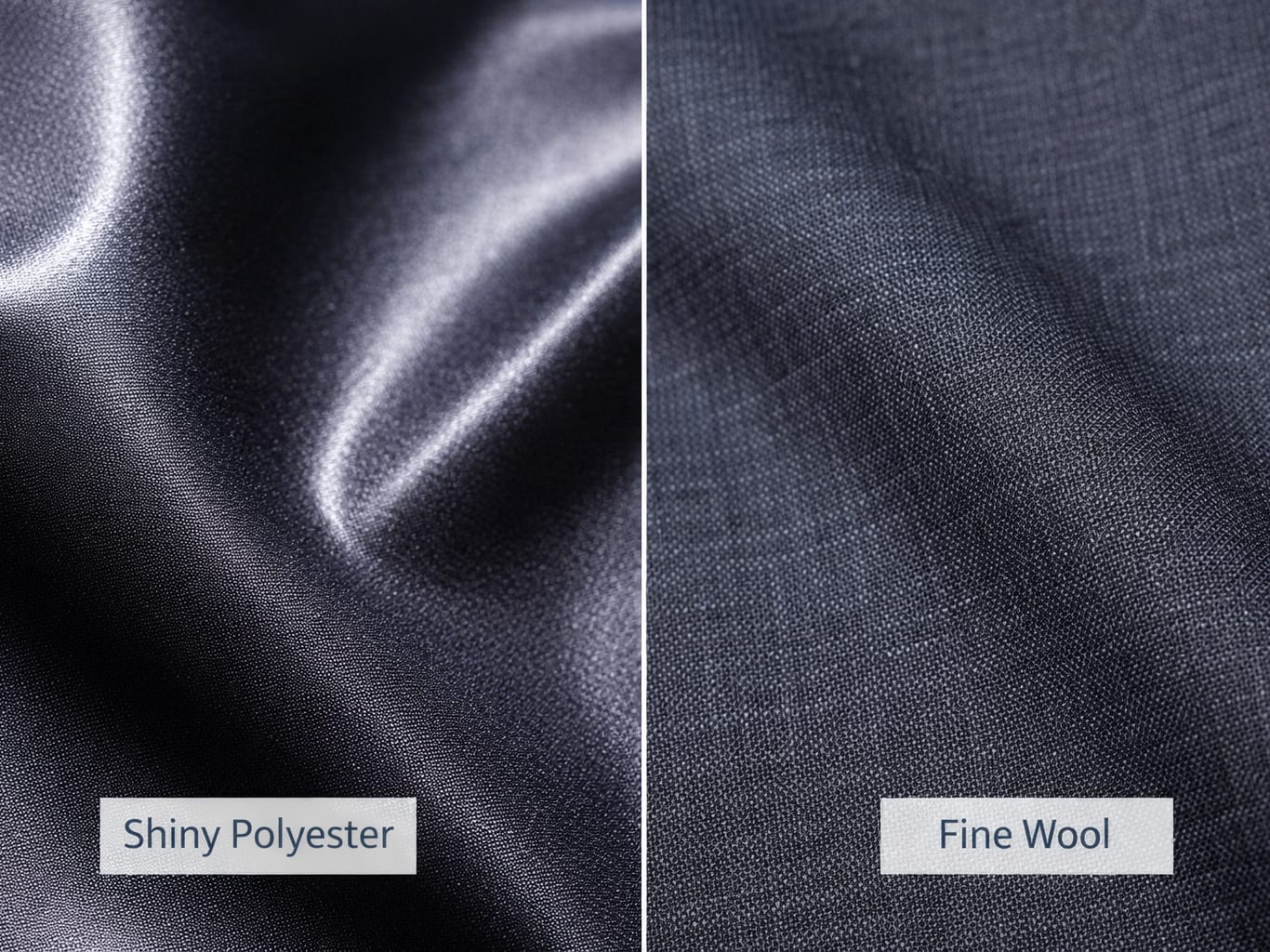
Suit Fabric Quality: Natural vs. Synthetic Materials
The fabric is where cheap suits fall apart immediately.
Cheap Suit Fabrics (Synthetic Blends):
- Polyester or rayon blends that feel plasticky
- Shiny, glossy sheen under light (tells everyone it’s cheap)
- Traps heat and doesn’t breathe
- Pilling and fraying after a few wears
- Wrinkles easily and loses shape permanently
- Looks tired and worn within weeks
Expensive Suit Fabrics (Natural Fibers):
- 100% pure virgin wool or premium wool blends (Super 100s+)
- Soft, supple feel with natural bounce
- Matte finish that looks refined
- Breathable and temperature-regulating
- Resists wrinkles and retains shape for years
- Ages gracefully, improving with time
The test: Touch both fabrics. Cheap suits feel squeaky and rough. Expensive suits feel soft and refined. High-quality wool drapes naturally on your body; cheap synthetics hang stiffly.
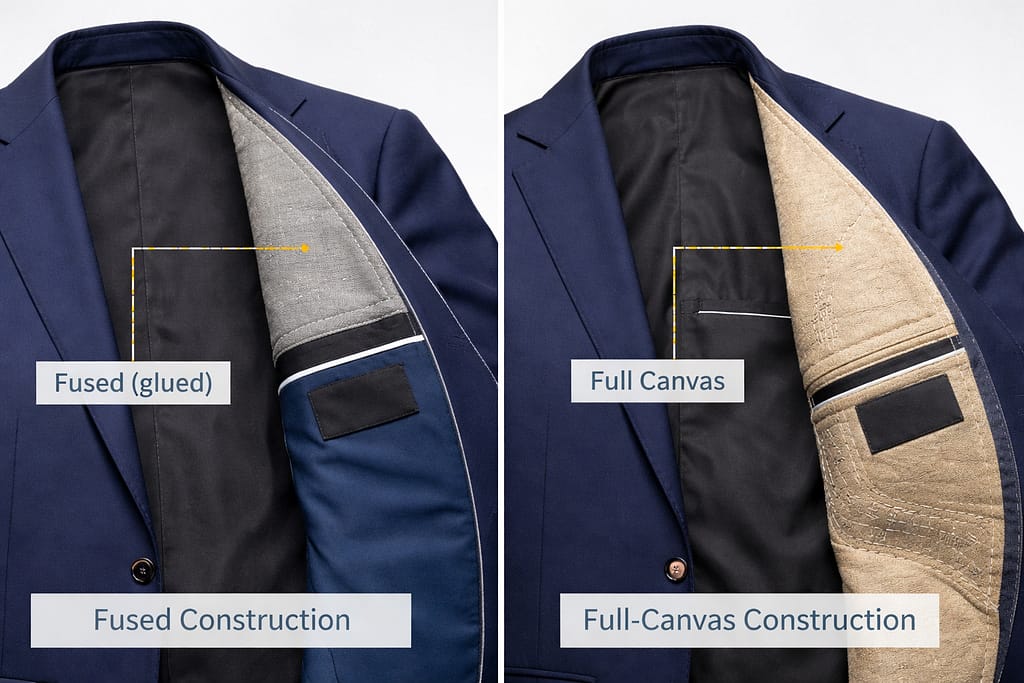
Suit Construction Methods: Canvas vs. Fused Interlining
Construction is the invisible foundation that determines how a suit moves, holds shape, and lasts.
Cheap Suit Construction (Fused/Glued):
- Adhesive glues interlining directly to outer shell
- Bubbles and separates after dry cleaning
- Cannot be repaired once damaged
- Loses shape permanently and looks limp
- Rigid, unnatural movement when you walk
- Lasts 1-2 years with regular wear
Expensive Suit Construction (Canvas):
Full Canvas:
- Natural horsehair canvas sewn throughout jacket chest
- Molds to your body over time
- Improves with wear (like quality denim)
- Maintains perfect shape for 10+ years
- Can be refurbished by professional tailors
- Cost-intensive (8-30 hours handwork per jacket)
Half Canvas:
- Canvas sewn through chest and lapels only
- Excellent structure at lower cost ($500-$800)
- Better than fused, not quite full canvas
- Superior to any glued suit
Think of fused suits like plastic glue, once broken, done forever. Canvas suits are engineering marvels that improve with age.

How Fit & Tailoring Separate Good Suits From Bad Ones
A well-fitting suit matters more than anything else. No expensive fabric fixes a poor fit.
Cheap Suit Fit Problems:
- Boxy, shapeless base patterns
- Wrong shoulder seams (can’t be fixed)
- Loose chest, waist, and collar areas
- Deep armholes causing restricted movement
- Cannot correct fundamental structural issues
- Tailoring can only rescue, never perfect
Expensive Suit Fit Advantages:
- Precisely engineered base patterns
- Clean shoulder lines aligned to bone structure
- Strategic padding for natural shoulder shape
- Proper chest and waist proportions
- Ample fabric reserve for future tailoring
- Tailoring enhances, doesn’t rescue
The critical difference: Cheap suits need emergency tailoring to become wearable. Expensive suits need refinement tailoring to become exceptional. Bad shoulders cannot be fixed, this is why expensive suits with correct shoulder construction command premium prices.
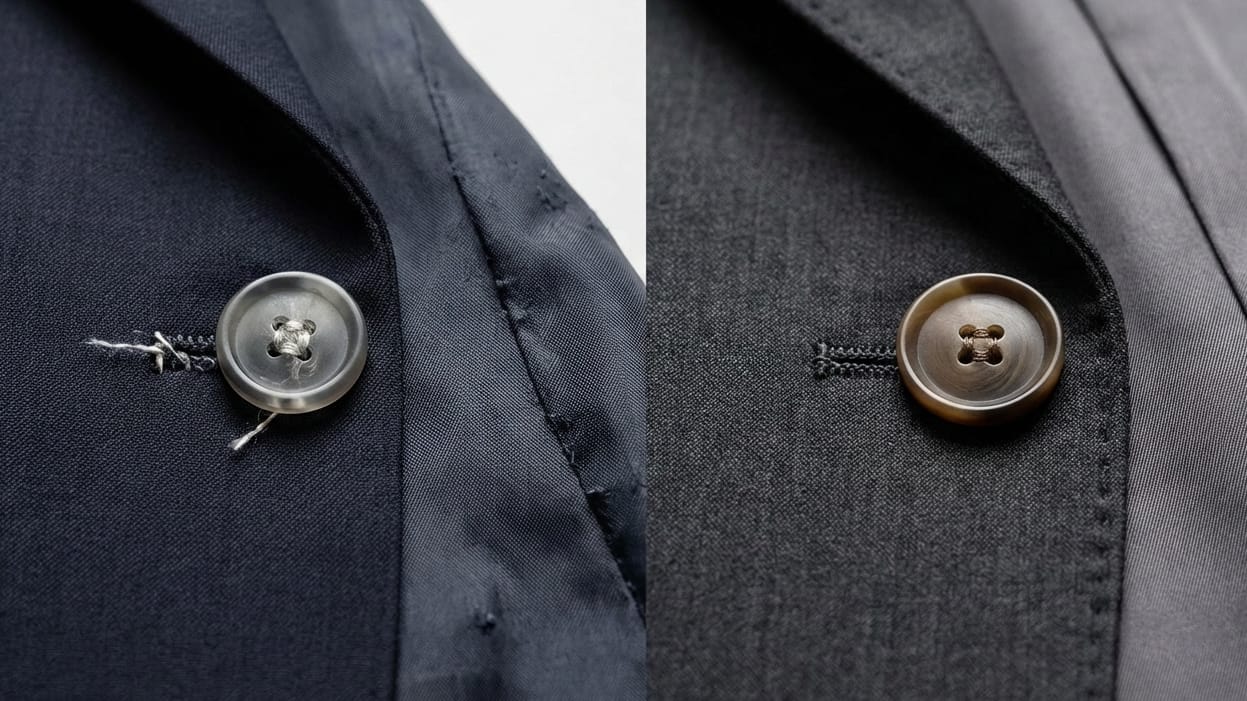
Quality Details: Hand-Stitched vs. Machine-Made
Small details communicate quality silently and instantly.
Cheap Suit Details:
- Plastic buttons (screams inexpensive)
- Thick, uneven machine stitching
- Cheap polyester lining
- Machine-finished buttonholes (often uncut or frayed)
- Raw, unfinished seams with loose threads
- Non-functional, sewn-shut pockets
Expensive Suit Details:
- Horn or mother-of-pearl buttons that age beautifully
- Fine hand-stitching (14+ stitches per inch)
- Silk or Bemberg rayon lining (breathable, durable)
- Hand-finished buttonholes with precision
- Pick-stitched seams visible on lapels
- Functional pockets with reinforced edges
These details never announce themselves, they work quietly. When you run your hand inside an expensive suit, you instantly feel the difference. Hand-stitched elements allow tailors to make precise adjustments and catch quality issues during production.
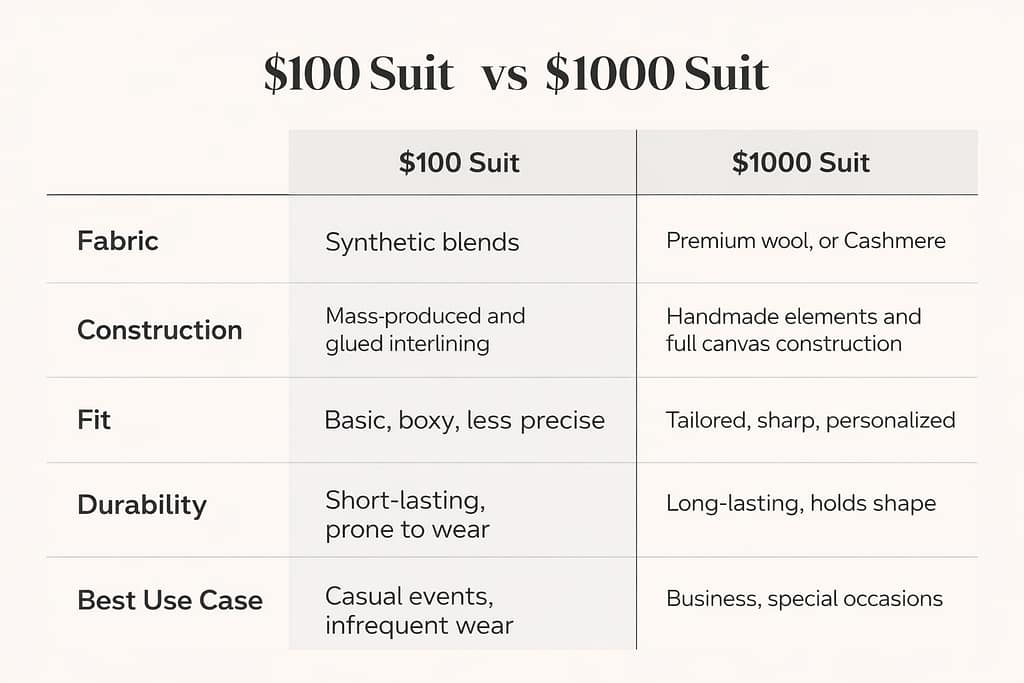
Durability: Cost Per Wear Analysis
The true cost of a suit isn’t the price, it’s what you pay per wearing.
$100 Suit Economics:
- Lifespan: 1-2 years (20-40 wears)
- Cost per wear: $2.50-$5.00
- Need 5-10 suits over 10 years
- 10-year total cost: $500-$1000
$1000 Suit Economics:
- Lifespan: 10+ years (300-500+ wears)
- Cost per wear: $2.00-$3.33
- Need 1-2 suits over 10 years
- 10-year total cost: $1000-$2000
Expensive suits aren’t necessarily pricier long-term, they just cost less per individual wearing. A durable suit is money well-invested.
When to Buy a Cheap Suit
Budget suits make sense in specific situations:
- Need a suit immediately (no time for ordering)
- Wear suits rarely (once or twice yearly)
- One-time event (wedding, court appearance)
- Experimenting with style before investing
- Budget genuinely doesn’t allow for quality
- Body changing significantly (temporary fit)
Brands: H&M, Zara, ASOS, Banana Republic Factory
These deliver acceptable basics. Don’t expect longevity or comfort.
When to Invest in an Expensive Suit
Premium suits are worth the investment when:
- Wear suits regularly for work (3+ times weekly)
- Attend formal events frequently
- Care about professional appearance and fit
- Want one excellent suit instead of many mediocre ones
- Value longevity and confidence
- Building a quality wardrobe foundation
Premium Brands Worth Your Money:
Accessible Premium ($500-$1000):
- SuitSupply – Modern cuts, excellent value, half-canvas standard
- Spier & Mackay – Canadian craftsmanship, competitive pricing
- Hugo Boss – Quality construction, fashion-forward cuts
- Brooks Brothers – Heritage brand, timeless styling
High-End Premium ($1000-$3000+):
- Canali – Italian tailoring, exceptional drape
- Brioni– Roman craftsmanship, luxury materials
- Kiton– Neapolitan hand-made standards
- Zegna– Superior Italian fabrics, unmatched quality
The Bottom Line: What You’re Really Paying For
A cheap suit covers your body. It provides fabric and structure, nothing more. Results: looks acceptable for one day, feels uncomfortable, deteriorates quickly, needs constant replacement.
An expensive suit supports your entire professional presence. It’s engineered for comfort, proper fit, and years of wear. Results: looks exceptional for decades, feels luxurious all day, ages gracefully, elevates how others perceive you.
You’re not paying for a brand name. You’re investing in:
- Premium materials that age beautifully
- Construction methods that last decades
- Craftsmanship visible in every stitch
- Fit engineering that flatters your body
- Years of reliable professional appearance
Smart strategy: If your budget is tight, buy fewer quality suits, not cheaper ones. If you wear suits regularly, the expensive suit is an investment with measurable returns through confidence, longevity, and professional impact.